Own Your Stack: White-Glove Build Today, Self-Serve Power Tomorrow
Myte builds the operating system with you first, then leaves your organization with the documentation, deployment model, and ownership path to keep extending it.
The operator moment
A business leader looks at subscriptions, disconnected AI tools, manual processes, and expensive internal coordination. The question is not which app to buy next. The question is which operating system the business should own so the team stops renting fragments of its own workflow.
The hidden cost
The hidden cost of rented stacks is strategic drift. Every tool stores part of the truth, every subscription grows with the team, every integration creates dependency, and every workflow improvement waits for someone else roadmap. Ownership changes the economic shape of the work.
Generic tools are designed for a broad market. They can be useful, but they rarely preserve the specific reasoning, language, approval paths, data relationships, and operating memory that make a company unique. Myte builds from those foundations instead of decorating around them.
What changes when the stack is owned
Workflow map
How to read the proof
An owned stack needs clean data contracts, deployable services, secure environments, clear documentation, and an evidence loop. The architecture should make it possible to move between Myte-managed operations and client-controlled infrastructure without losing the operating model.
How Myte delivers it
- 1Identify the first workflow worth owning and the domain experts whose judgment must be captured.
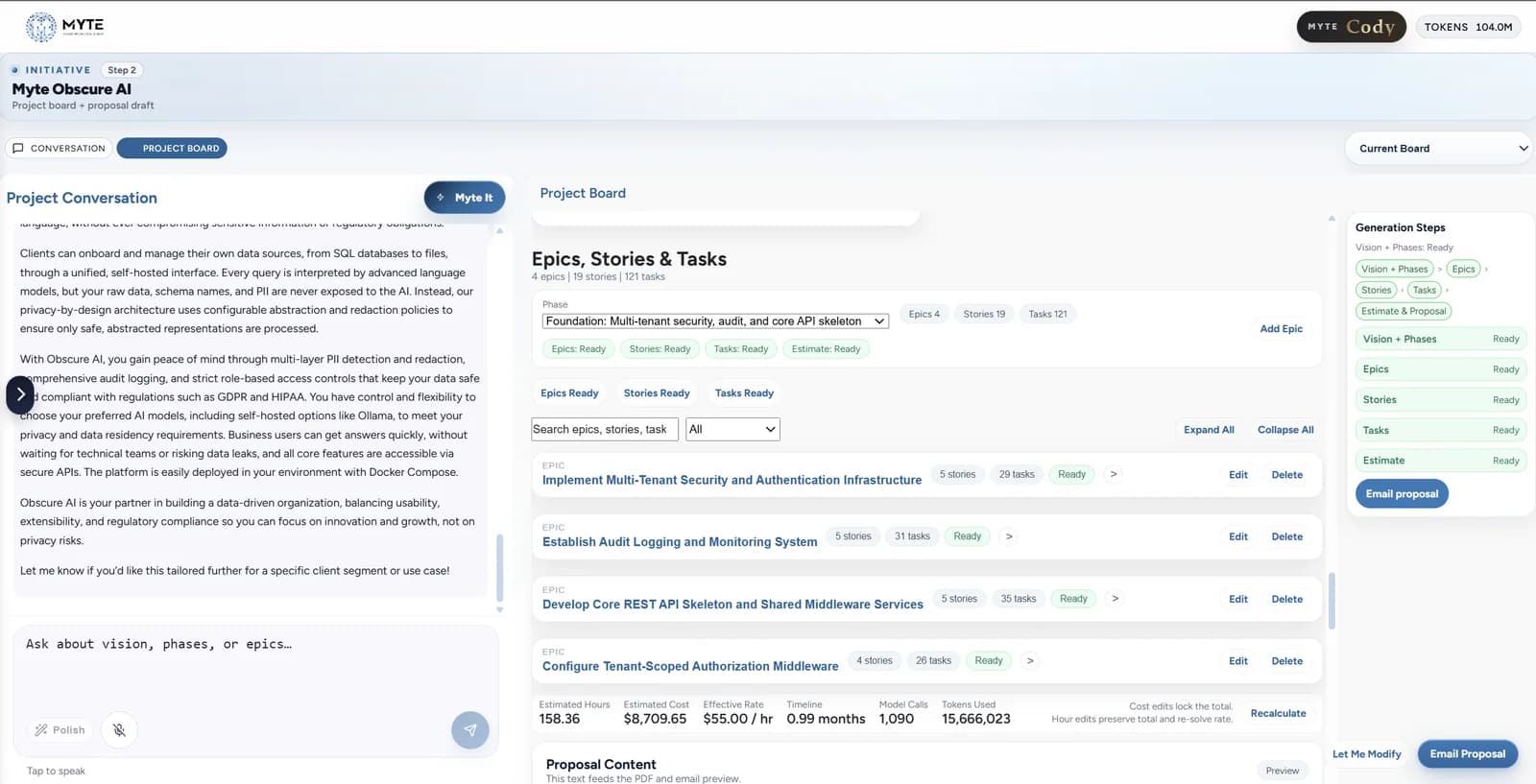
- 2Build the production slice with visible proof, documentation, training, and deployment choices.
- 3Harden the system through operator feedback, tests, admin controls, and maintenance runbooks.
- 4Expand toward self-serve ownership while Myte continues to manage, train, or support as needed.
Buyer checklist
Why this belongs in your operating system
Myte exists for businesses that want to own their technology their way. We build with the people who understand the work, translate expert reasoning into software, and keep the stack close enough that the company can grow from it instead of being boxed in by it.
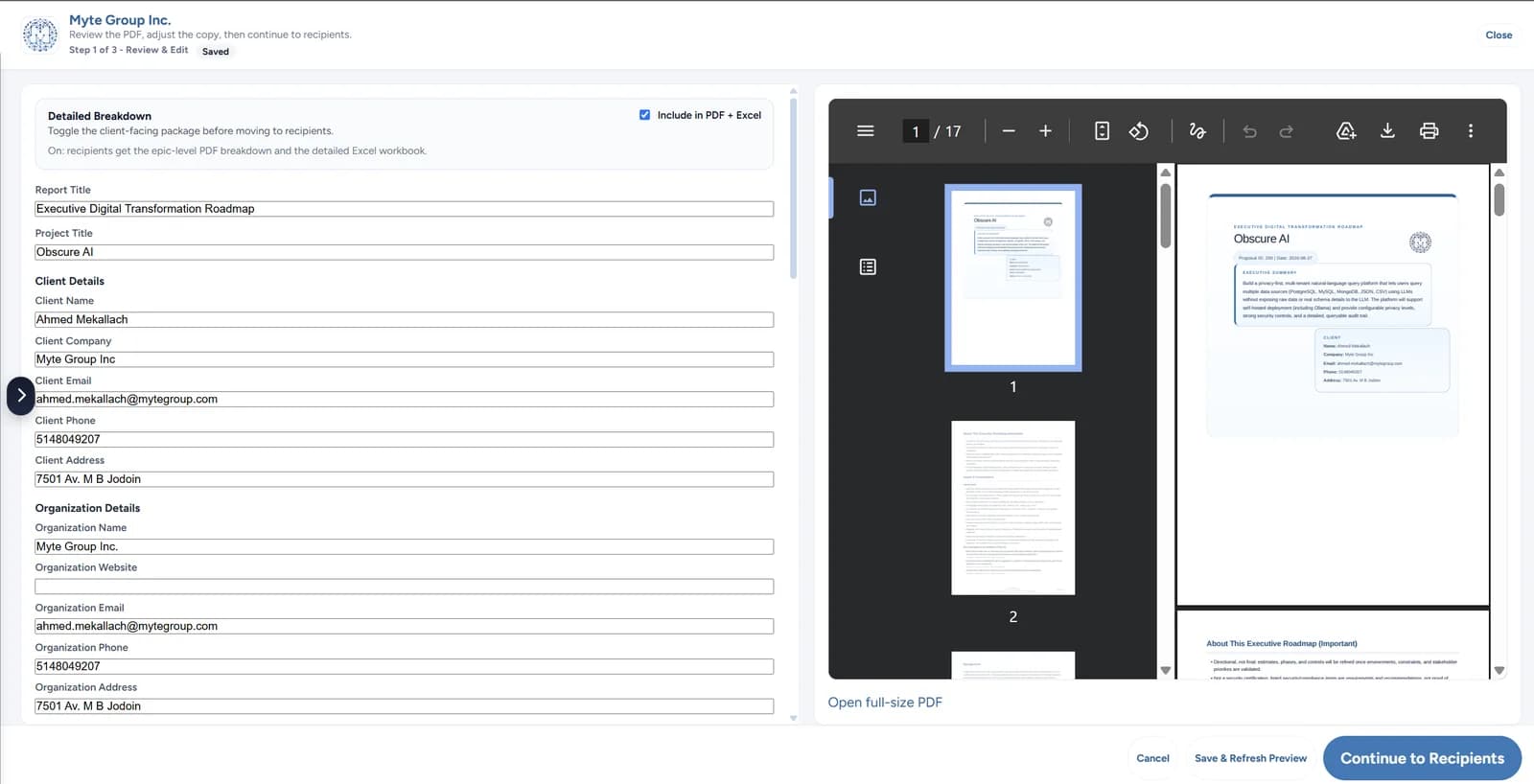
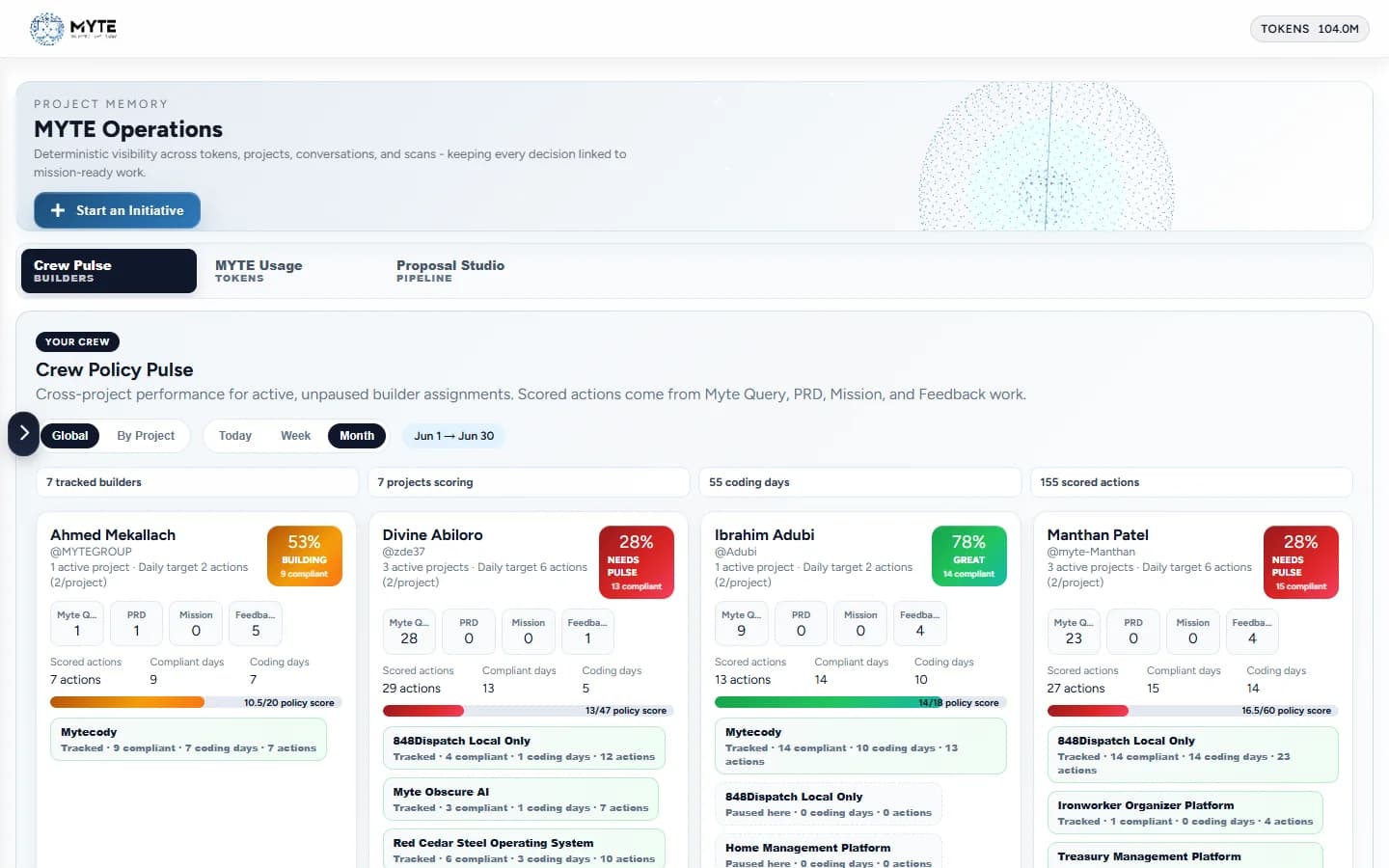
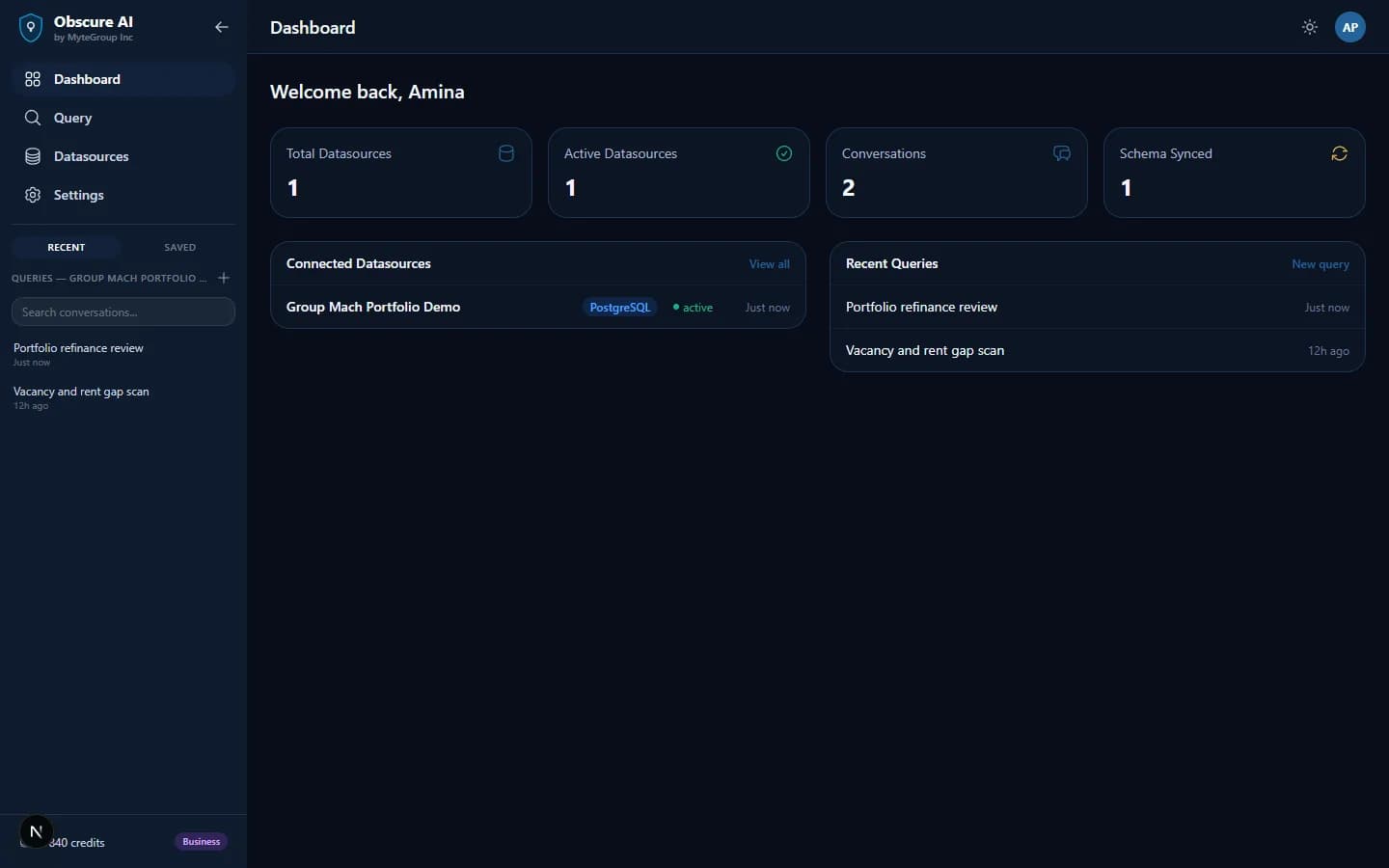
Approved screenshots and workflow examples that show how the operating model works in practice.
Questions operators ask
What does it mean to own your stack?
It means the business owns the operating model, data relationships, documentation, deployment path, and future roadmap instead of depending entirely on rented tools.
Does Myte manage the environment?
Yes. Myte can manage the deployed environment, or we can support the client in its own infrastructure depending on governance needs.
Is this just integration work?
No. Integration connects tools. Myte builds the operating foundation around the workflow and uses integrations only when they serve that foundation.
Can private AI be part of the stack?
Yes. Private or local inference can be used where data boundaries, cost, or control make it necessary.
How does the first project start?
Start with one workflow that is painful, valuable, and well understood by domain experts.
Can the system become self-serve later?
Yes. Documentation, training, admin controls, and stable deployment are part of the ownership path.
Related field notes
Myte Cody Turns Ideas Into Production Operating Systems
Cody is the delivery operating layer that keeps client intent, missions, conversations, feedback, proof, code, and handoff connected.
Read notePrivate Inference Is an Operating Posture, Not a Model Choice
Private AI becomes real when the model path, data boundary, deployment environment, access rules, and workflow integration are designed together.
Read noteOperational Visibility Should Tell You What Needs Action, Not Just What Is Broken
A useful monitoring system connects system health, queues, exceptions, owners, context, and next action into one operating surface.
Read noteBuild your owned operating system with Myte
Start with one workflow your team already understands, then turn it into software your business owns.