Sovereign delivery network
We pull from a focused network of engineers, builders, and problem solvers so the transition is designed around the operating reality, not a template.
MYTE builds around the records, roles, rules, and operating pressure of the environment—not around a generic industry template. Explore delivered construction, union, healthcare, real estate, and private-data workflows.
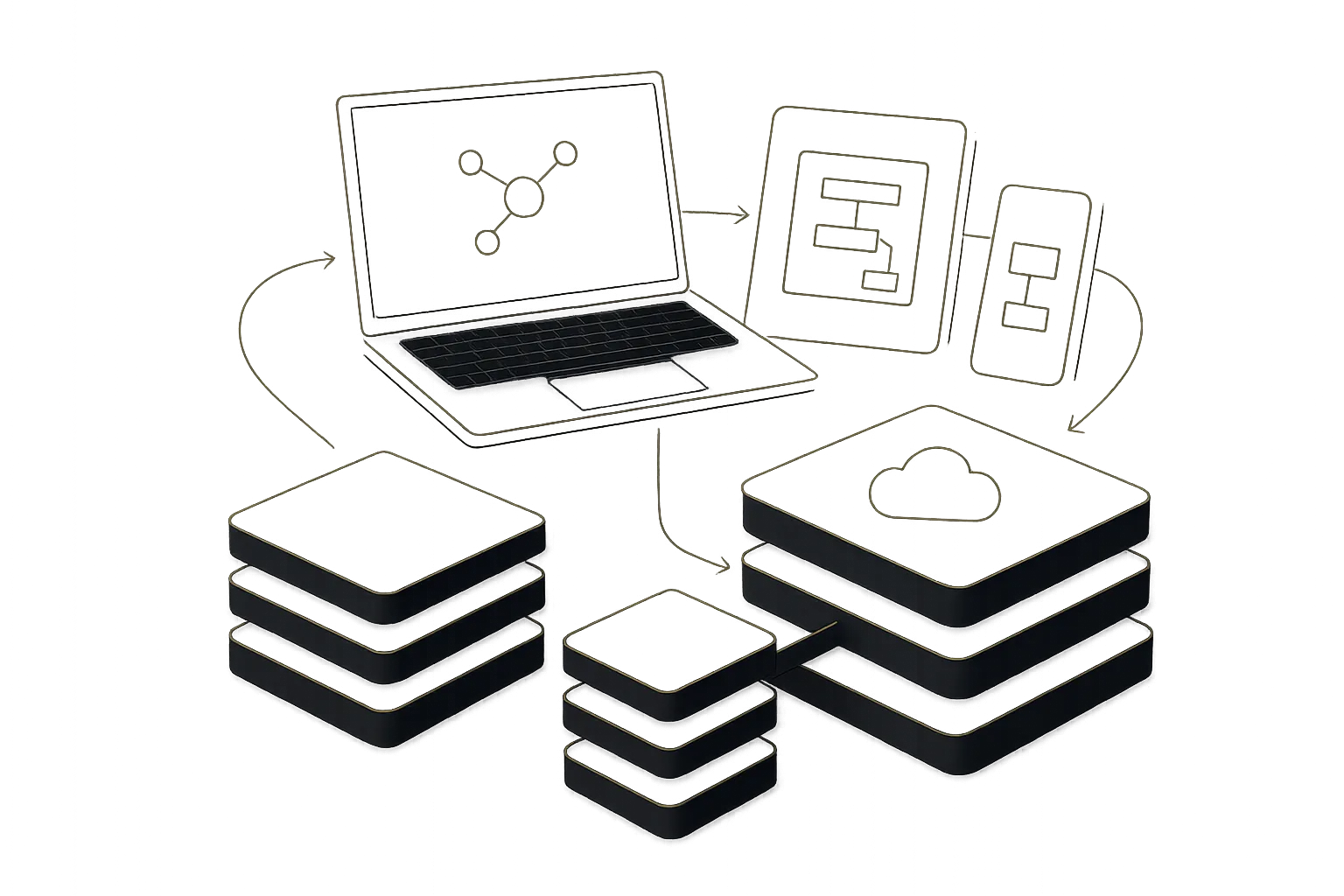
Construction moves RFQs, estimates, documents, and field context. Unions move contractor demand, member offers, referrals, organizing memory, and accountability. Healthcare moves patient context through review. Real estate connects demand, properties, leases, maintenance, providers, payments, and relationships.
We pull from a focused network of engineers, builders, and problem solvers so the transition is designed around the operating reality, not a template.
AI is introduced through bounded workflows, private or hybrid inference paths, clear permissions, and review steps where risk requires judgment.
Source, docs, runbooks, deployment paths, and training are part of the deliverable so the system does not disappear into vendor dependency.
Each route names the actors, records, decisions, constraints, and proof already represented in MYTE systems.
Owned operating systems for RFQs, CRM, estimating pipelines, bid documents, permissions, memory, and audit governance.
construction ERP, RFQ management, bid management, estimating workflows
Market recovery and allocation workflows, organizing operations, and member support systems.
union operations software, member support, market recovery, allocation workflows
Health Connect proof: patient intake, doctor review, admin triage, AI summaries, and traceable consultations.
healthcare workflow automation, patient intake, HIPAA-aware AI, clinical review
Owned systems for buyer/seller intake, CRM follow-up, leasing, maintenance, payments, documents, and agent-owned data.
real estate CRM, property management operating system, leasing workflows
Operating systems for customer records, secure intake, product workflows, approvals, exception handling, and evidence trails.
private AI for banking, customer information safeguards, approval workflows
Structured workflows for applications, underwriting support, document packages, review queues, notifications, and compliance evidence.
loan workflow automation, lending CRM, document review, risk evidence
Owned systems for client document intake, reconciliations, approvals, month-end close, reporting, and audit-ready handoffs.
accounting workflow automation, month-end close automation, AP AR workflows
Matter intake, client files, contract review workflows, research support, drafting queues, confidentiality boundaries, and partner review.
legal intake automation, private AI for law firms, contract workflow software
Claims intake, evidence collection, policy context, review queues, adjuster handoffs, customer communication, and audit trails.
claims workflow automation, insurance operations software, document triage
Client intake, proposal workflows, project memory, deliverable review, internal approvals, and reusable operating knowledge.
client operations software, advisory workflow automation, knowledge management
Mobile-first systems for dispatch, tickets, inspections, photos, approvals, inventory, crew communication, and service history.
field service operations software, mobile workforce workflows, dispatch automation
Systems for production requests, quality checks, maintenance, inventory signals, shift handoffs, SOPs, and operating visibility.
manufacturing workflow automation, operations management software, quality workflows
Some work belongs in a managed cloud. Some work belongs close to your data. Some teams need a hybrid path: cloud convenience with private inference for sensitive workflows. Myte designs the operating system around that reality instead of forcing one deployment model.
For sensitive data, regulated workflows, and cost control where sending everything to a third-party model provider is not acceptable.
For teams that need speed, availability, and central operations while still keeping roles, approvals, and audit evidence explicit.
For companies that want practical adoption now while reserving the right to move sensitive workloads closer to owned infrastructure.
The first release should have known users, durable records, visible decision authority, measurable acceptance, and a support path. Evidence—not enthusiasm—decides what expands next.
Capture roles, forms, decisions, documents, exceptions, approvals, and the places where work currently leaks.
Decide what can use cloud AI, what needs private inference, what needs human approval, and what should never leave your control.
Deliver one workflow that becomes useful quickly: intake, review, assignment, approval, document output, or reporting.
Deliver source, docs, runbooks, monitoring expectations, training, and a maintenance path your team can understand.
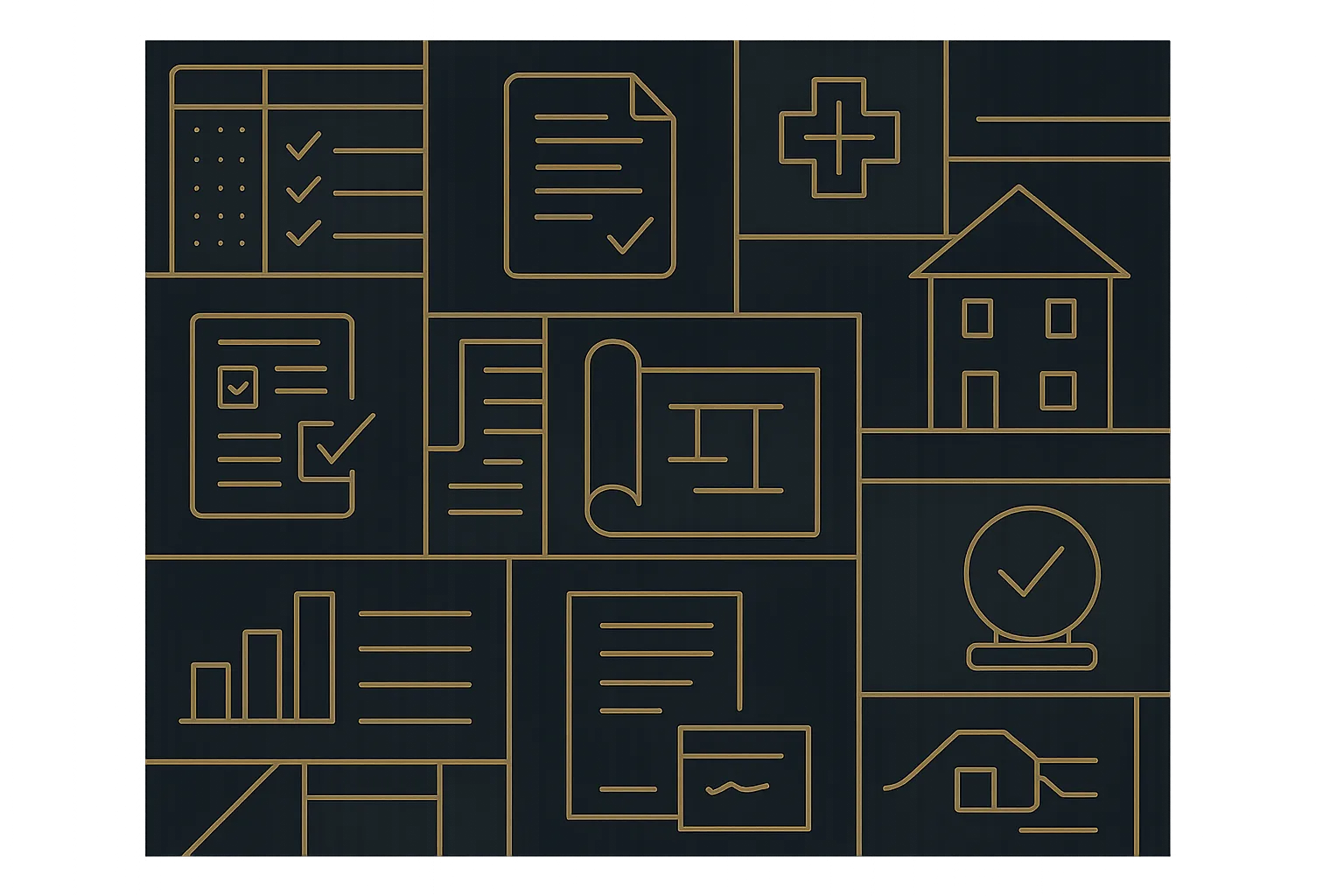
The industries that benefit most from owned operating systems are often the same industries where data exposure, weak governance, and unclear responsibilities create the most risk.
Customer records, credit decisions, loan packages, approvals, document trails, and risk evidence need structure before they need more chat windows.
Patient intake, clinician review, admin triage, notes, history, and follow-up signals need privacy boundaries and review-before-output workflows.
Client files, contracts, reconciliations, tax documents, matter notes, and professional judgment need controlled assistance, not uncontrolled uploads.
The proof starts in construction, healthcare, real estate, and labor. The same operating-system pattern extends to other privacy-sensitive teams.
Red Cedar Steel and Immostar proof show governed construction work moving through owned systems.
Health Connect shows how sensitive intake can become structured operating context.
Myte Estate and CourtierXpert show owned real estate workflows for operators and agents.
Union systems show how governed daily work can stay traceable and usable.
Short answers for owners, operators, and leaders deciding whether to keep renting workflows or start owning the operating layer.
Yes. Myte builds custom operating software around the workflow, controls, roles, approvals, data boundaries, and ownership requirements of the organization.
Yes. When the use case requires it, we design local or hybrid inference paths so sensitive workflows do not depend entirely on third-party model providers.
Yes. The goal is not to rip everything out on day one. We map the current stack, then connect what should stay and replace what is creating drag.
For systems built for you, ownership deliverables are explicit: source, documentation, runbooks, deployment notes, and training.
We design for practical operations: browsers, mobile, tablets, iPads, Windows, macOS, Android, and iPhone workflows depending on the team.
No. Myte can host and maintain systems, but the strategic goal is an owned operating system under your control, not another rigid rented dashboard.