Myte Cody Turns Ideas Into Production Operating Systems
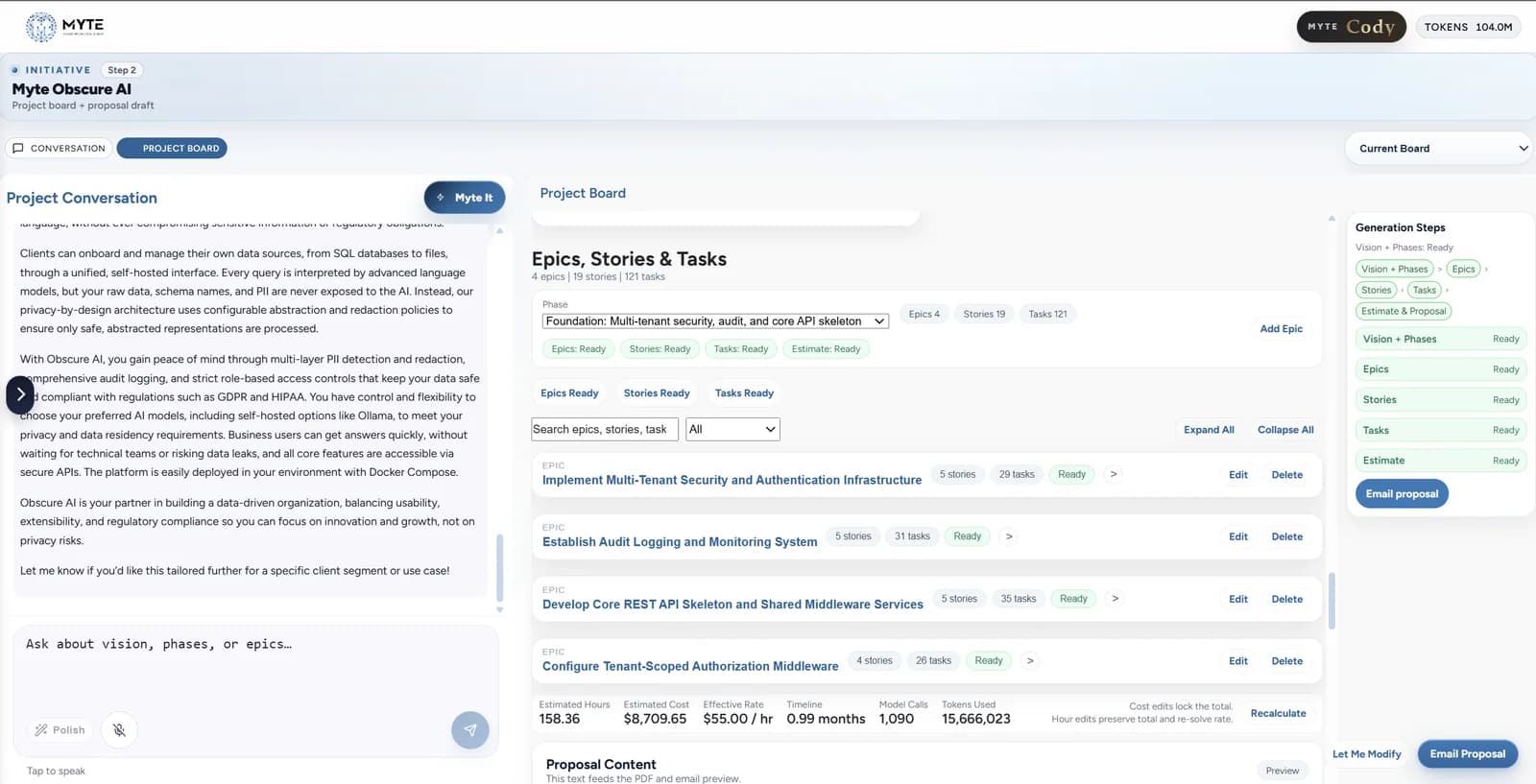
Cody is the delivery operating layer that keeps client intent, missions, conversations, feedback, proof, code, and handoff connected.
The operator moment
A client explains a workflow, a builder implements a slice, feedback arrives, and proof needs to be reviewed. Without a delivery operating system, the team loses context between meetings, messages, screenshots, and code.
The hidden cost
The hidden cost is delivery drift. Work gets done, but not always against the right intent. Feedback gets repeated, decisions become vague, and handoff documentation is written too late.
Generic project tools track tasks, but owned-system delivery needs mission context, client language, screenshots, code evidence, feedback loops, and deployment memory together.
What changes when the system is owned
Workflow map
How to read the proof
Delivery context should be a first-class data model. Missions, conversations, feedback, code evidence, screenshots, test results, and deployment notes should be linked so maintenance has memory.
How Myte delivers it
- 1Capture the client workflow and convert it into missions with acceptance criteria.
- 2Build and attach proof as the system changes.
- 3Route feedback into the mission context until it is resolved.
- 4Preserve documentation, release history, and next-roadmap context for maintenance.
Buyer checklist
Why this belongs in your operating system
Myte Cody exists because owned systems need an owned delivery process. It keeps intent, proof, feedback, and handoff close enough that the final system reflects the business.
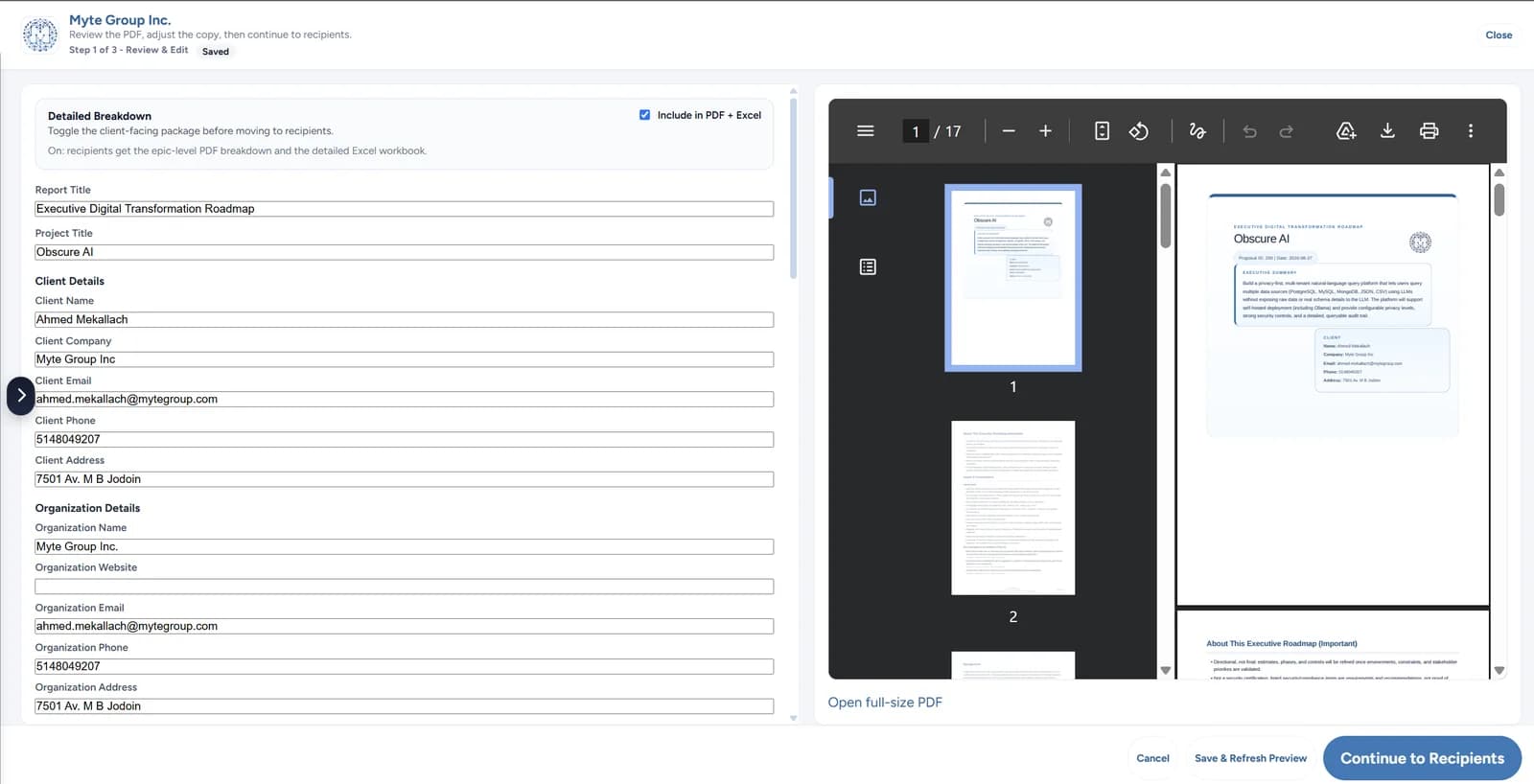
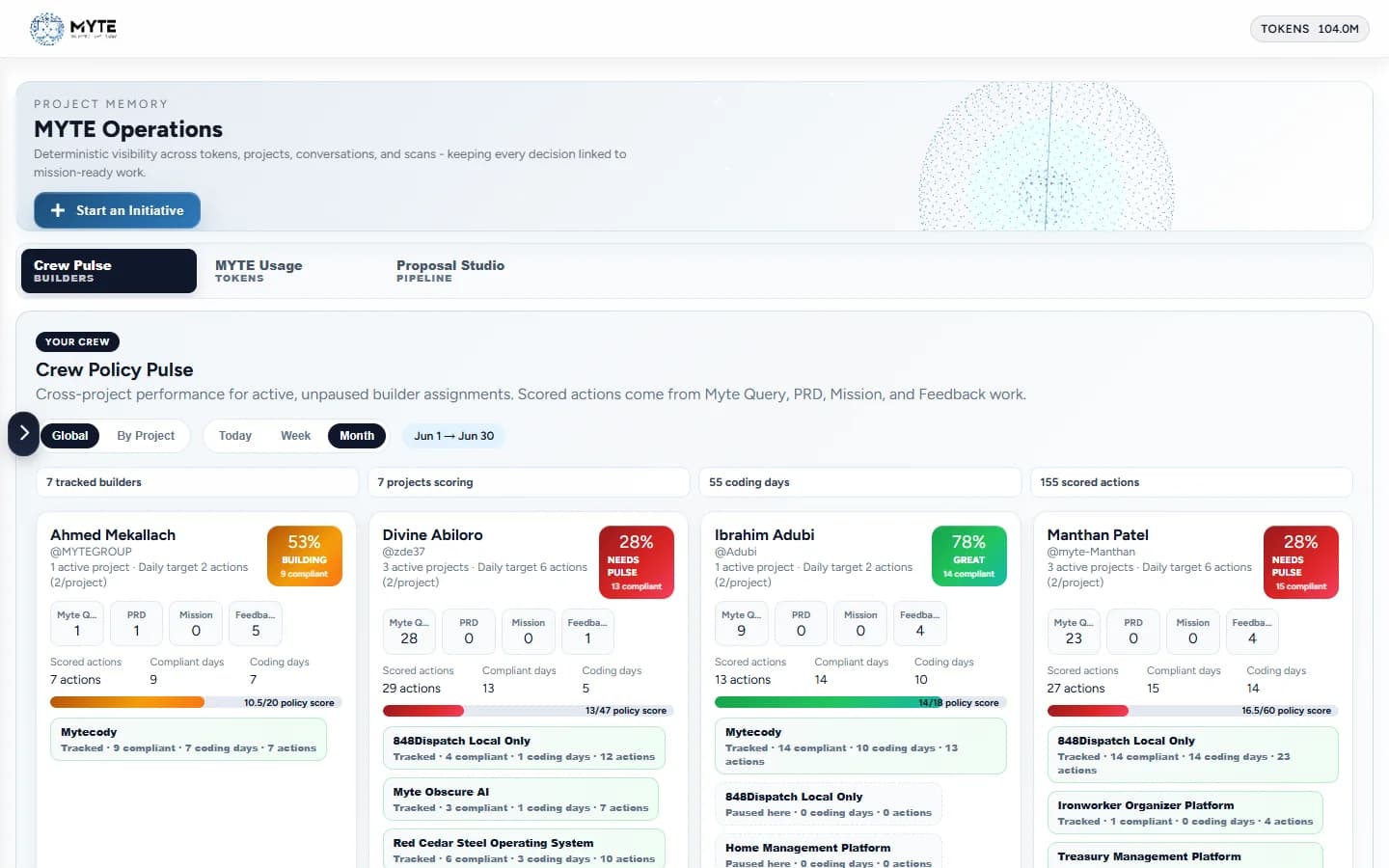
Approved screenshots and workflow examples that show how the operating model works in practice.
Questions operators ask
What is Myte Cody?
The Myte delivery operating layer for missions, conversations, feedback, proof, code context, and handoff.
Is it a project management tool?
It includes planning, but it is built around owned-system delivery and proof.
Why does proof matter?
Proof lets clients review the real system instead of relying on vague status updates.
Can it support maintenance?
Yes. Preserved context helps future fixes and improvements.
How does a client use it?
Clients use it through scoped roadmap, feedback, proof review, and delivery conversations.
Related field notes
Own Your Stack: White-Glove Build Today, Self-Serve Power Tomorrow
Myte builds the operating system with you first, then leaves your organization with the documentation, deployment model, and ownership path to keep extending it.
Read noteOperational Visibility Should Tell You What Needs Action, Not Just What Is Broken
A useful monitoring system connects system health, queues, exceptions, owners, context, and next action into one operating surface.
Read notePrivate Inference Is an Operating Posture, Not a Model Choice
Private AI becomes real when the model path, data boundary, deployment environment, access rules, and workflow integration are designed together.
Read noteBuild your owned operating system with Myte
Start with one workflow your team already understands, then turn it into software your business owns.