Union Organizing Software Should Preserve Field Momentum
Organizing succeeds when field conversations, contacts, campaign state, next actions, and leadership visibility become shared memory.
The operator moment
An organizer returns from the field with conversations, promises, concerns, names, and timing. If that information is not captured in an actionable way, the next day begins with memory loss. The best system keeps the human story and the operational action together.
The hidden cost
The hidden cost is campaign drift. Without a shared record, follow-up gets uneven, leadership sees only fragments, and staff changes can erase context that took months to build.
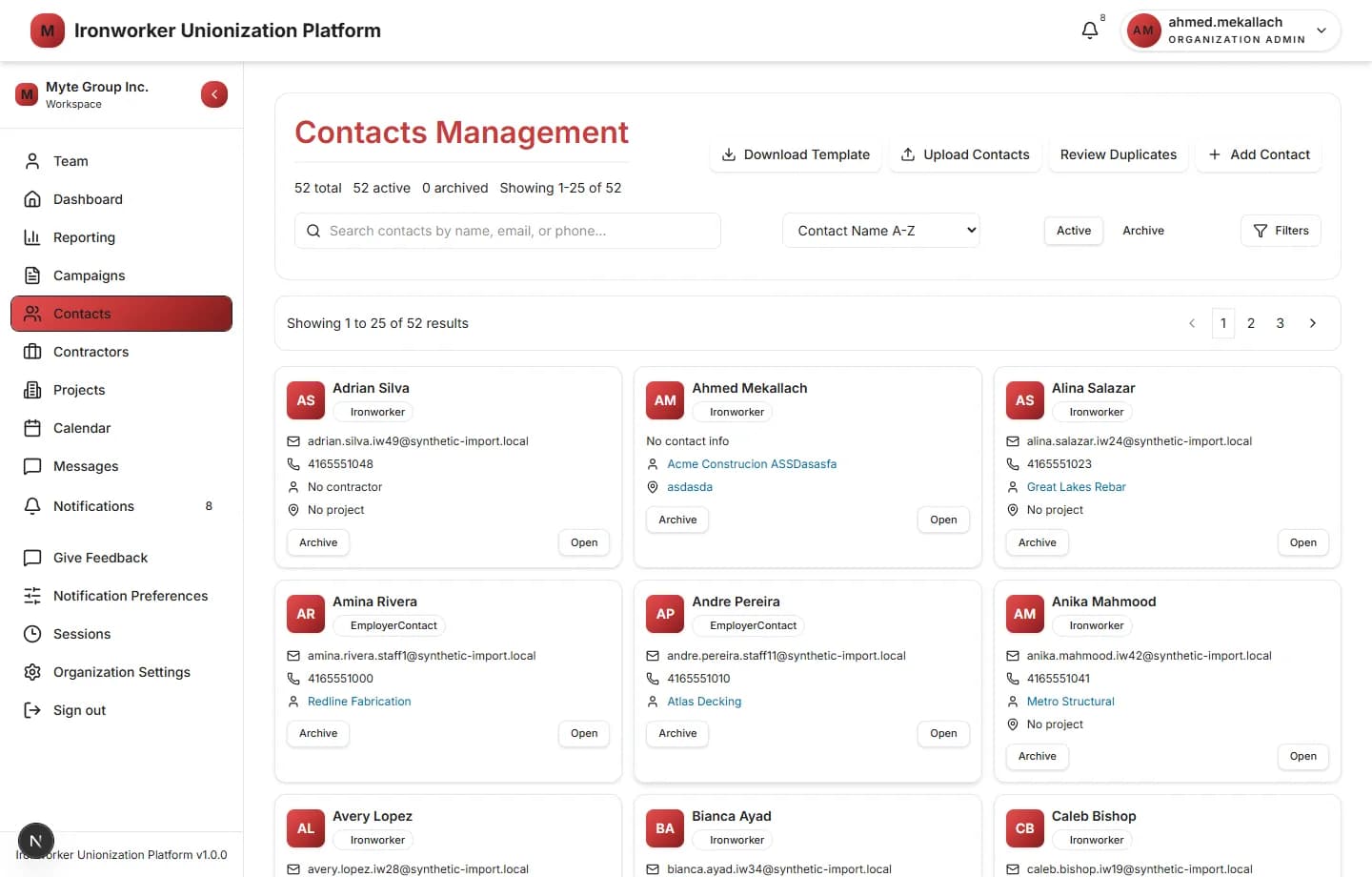
A contact database can list people, but organizing needs relationship stage, field notes, campaign status, commitments, concerns, next action, and leadership visibility. The structure must respect the organizing craft.
What changes when the system is owned
Workflow map
How to read the proof
Organizer systems should model contacts, organizations, campaigns, conversations, commitments, statuses, actions, and outcomes. The system must remain fast to update because field memory is valuable only when it can be captured while still fresh.
How Myte delivers it
- 1Map the campaign language, field note patterns, relationship stages, follow-up rules, and reporting needs.
- 2Build the first contact and campaign board around stage, owner, notes, and next action.
- 3Test with organizers so the workflow respects the rhythm of real field work.
- 4Extend into dashboards, import tools, reminders, mobile flows, and private AI summaries.
Buyer checklist
Why this belongs in your operating system
Myte builds organizer systems around the human work. The technology preserves field memory, improves follow-up, and gives leadership visibility while keeping the organizer in control.
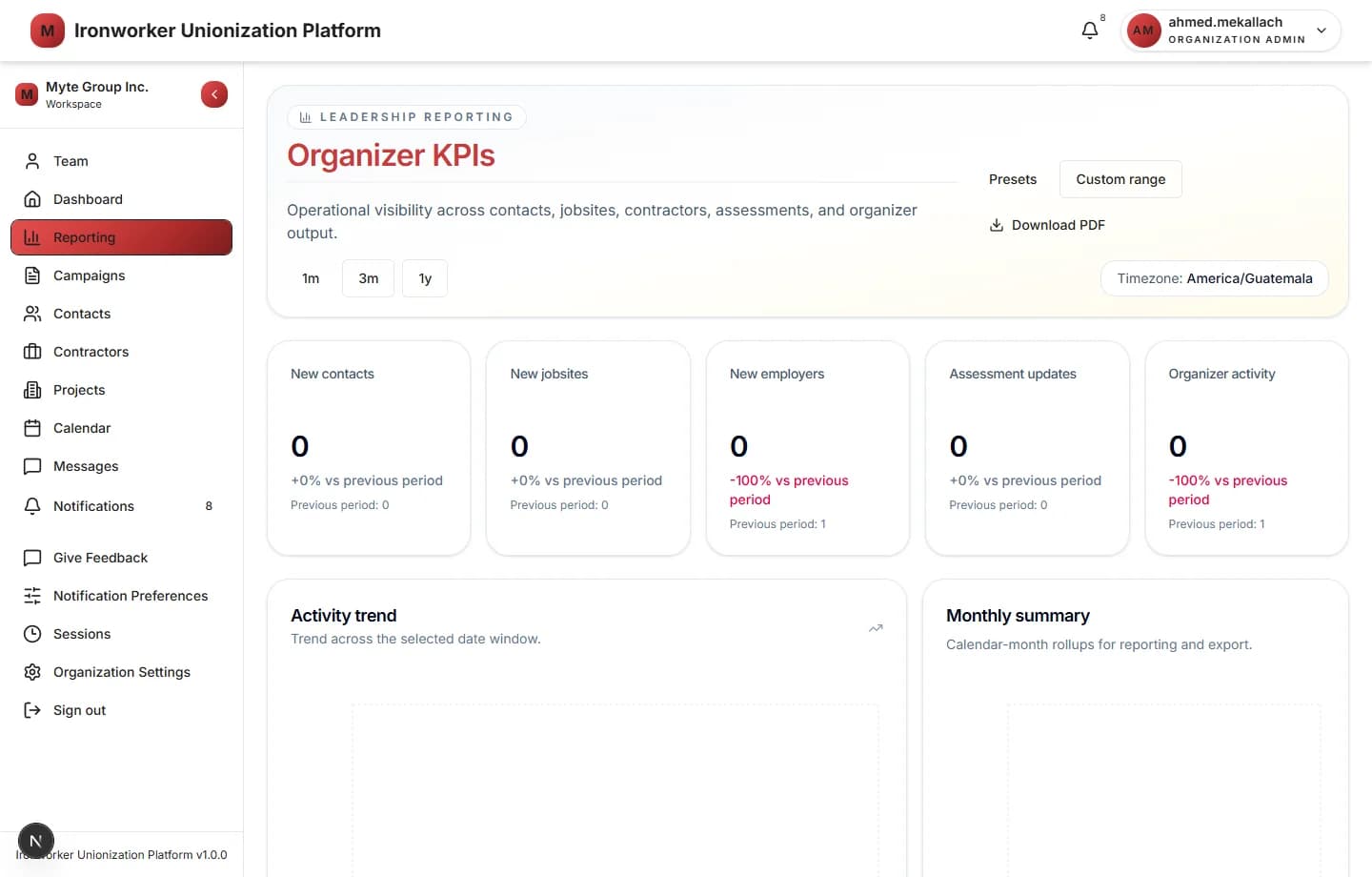
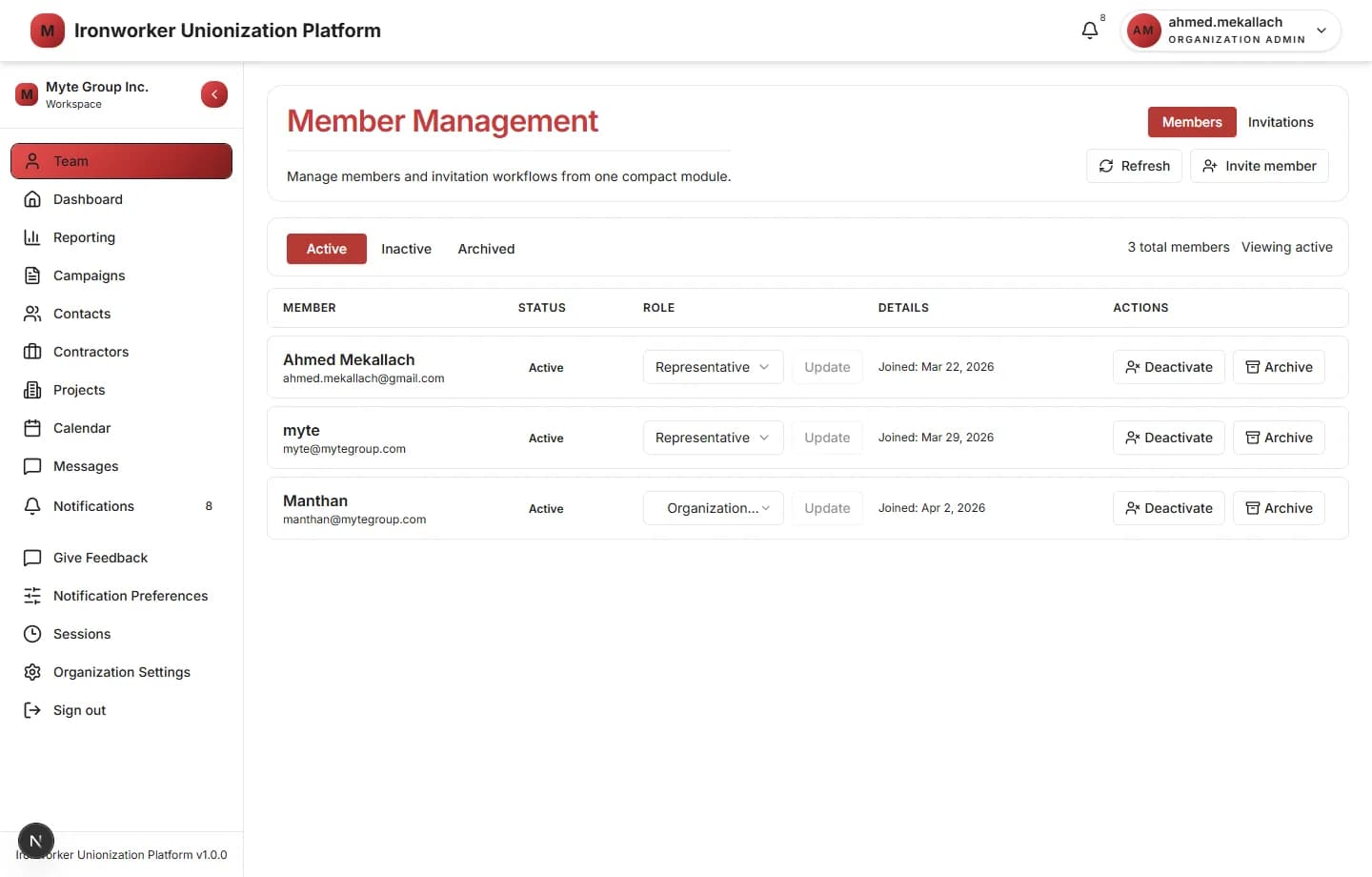
Approved screenshots and workflow examples that show how the operating model works in practice.
Questions operators ask
What is union organizer software?
Software for contacts, campaigns, field notes, relationship stages, follow-up, leadership visibility, and outcomes.
Does it replace organizer judgment?
No. It preserves judgment and context so organizers can act with better memory.
Can it be mobile-friendly?
Yes. Field capture should be fast from phone or tablet.
Can leadership see campaign status?
Yes, through dashboards and status views built around the campaign model.
Can AI help?
AI can summarize campaign state once the records are structured and governed.
Related field notes
Market Recovery Needs a System, Not a Wall of Follow-Up Notes
Market recovery work succeeds when contractors, opportunities, contacts, status, field intelligence, and follow-up become shared operating memory.
Read noteWhat a Union Dispatch Operating System Must Make Visible
Dispatch is not only a queue. It is a trust workflow between contractor requests, staff review, member offers, referrals, and accountable follow-up.
Read noteDeterministic Retrieval Is How Private AI Earns Trust
Private AI becomes trustworthy when plain-language questions trigger validated retrieval paths, not uncontrolled model guesses.
Read noteBuild your owned operating system with Myte
Start with one workflow your team already understands, then turn it into software your business owns.