
Deterministic Retrieval Is How Private AI Earns Trust
Private AI becomes trustworthy when plain-language questions trigger validated retrieval paths, not uncontrolled model guesses.
The operator moment
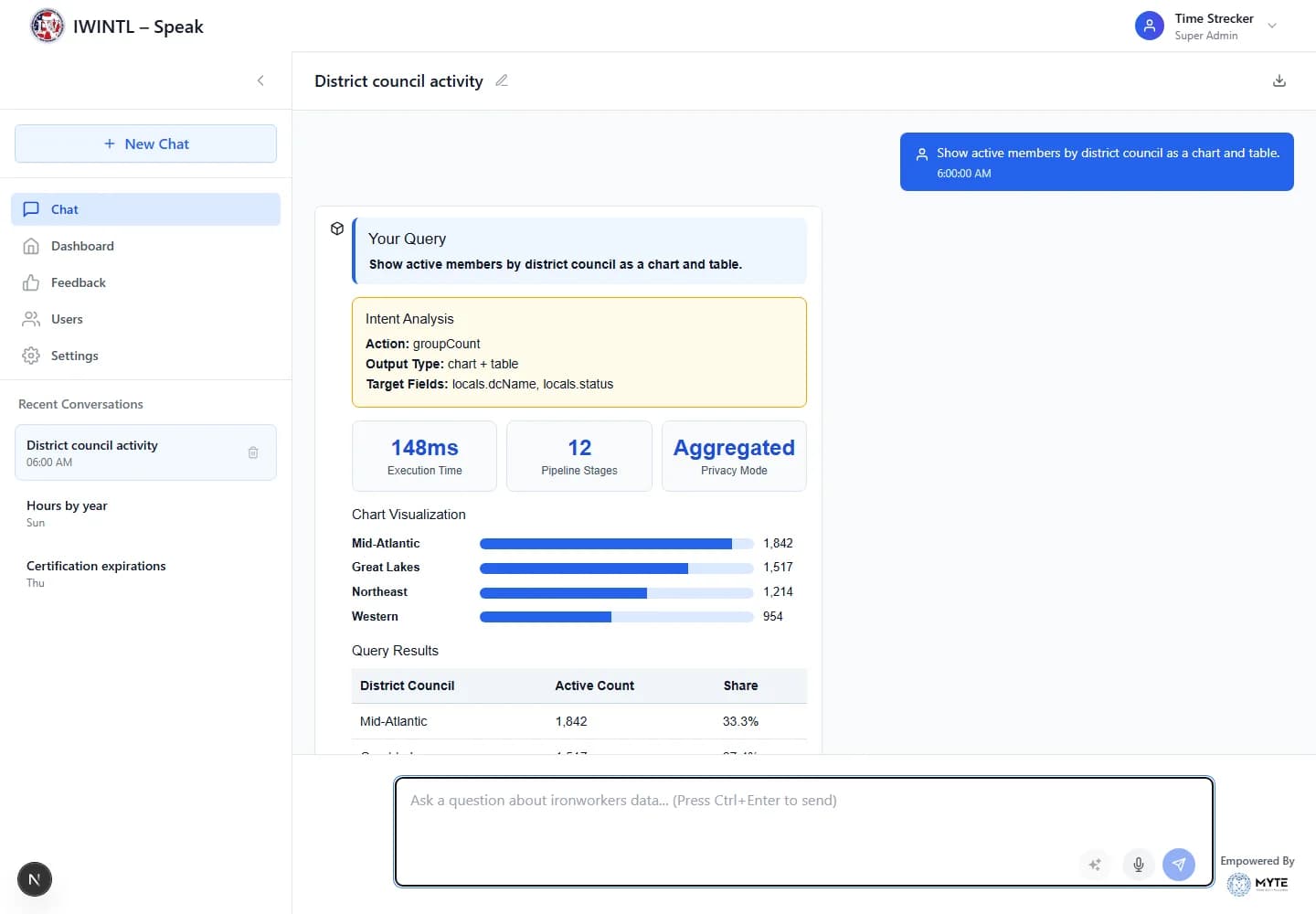
A leader asks a plain question and expects a useful answer. The system must understand the intent, choose an approved metric, apply valid filters, return numbers, and show enough evidence to be trusted. That path cannot depend on model vibes.
The hidden cost
When retrieval is not deterministic, every answer creates doubt. Users wonder whether the model guessed, whether the right table was queried, and whether private data crossed the wrong boundary. Doubt kills adoption faster than missing features.
Generic chat tools treat the question as conversation. Operational analytics treats the question as a controlled request against a known data model. Private AI needs the second posture with the convenience of the first.
What changes when the system is owned
Workflow map
How to read the proof
The system should separate intent parsing from data access. The LLM can classify or rephrase the request, but approved server code should map that request to known metrics, run validated queries, and return structured output.
How Myte delivers it
- 1Define the question families users are allowed to ask and the metrics that answer them.
- 2Normalize the database so filters, categories, and aggregations behave consistently.
- 3Build the retrieval layer with validation, permissions, charts, and blocked-query rules.
- 4Train users to ask better questions and inspect answers before broad rollout.
Buyer checklist
Why this belongs in your operating system
Myte builds private AI as an operating system feature. Deterministic retrieval gives leaders an easy interface while preserving the rules, boundaries, and evidence the organization needs.
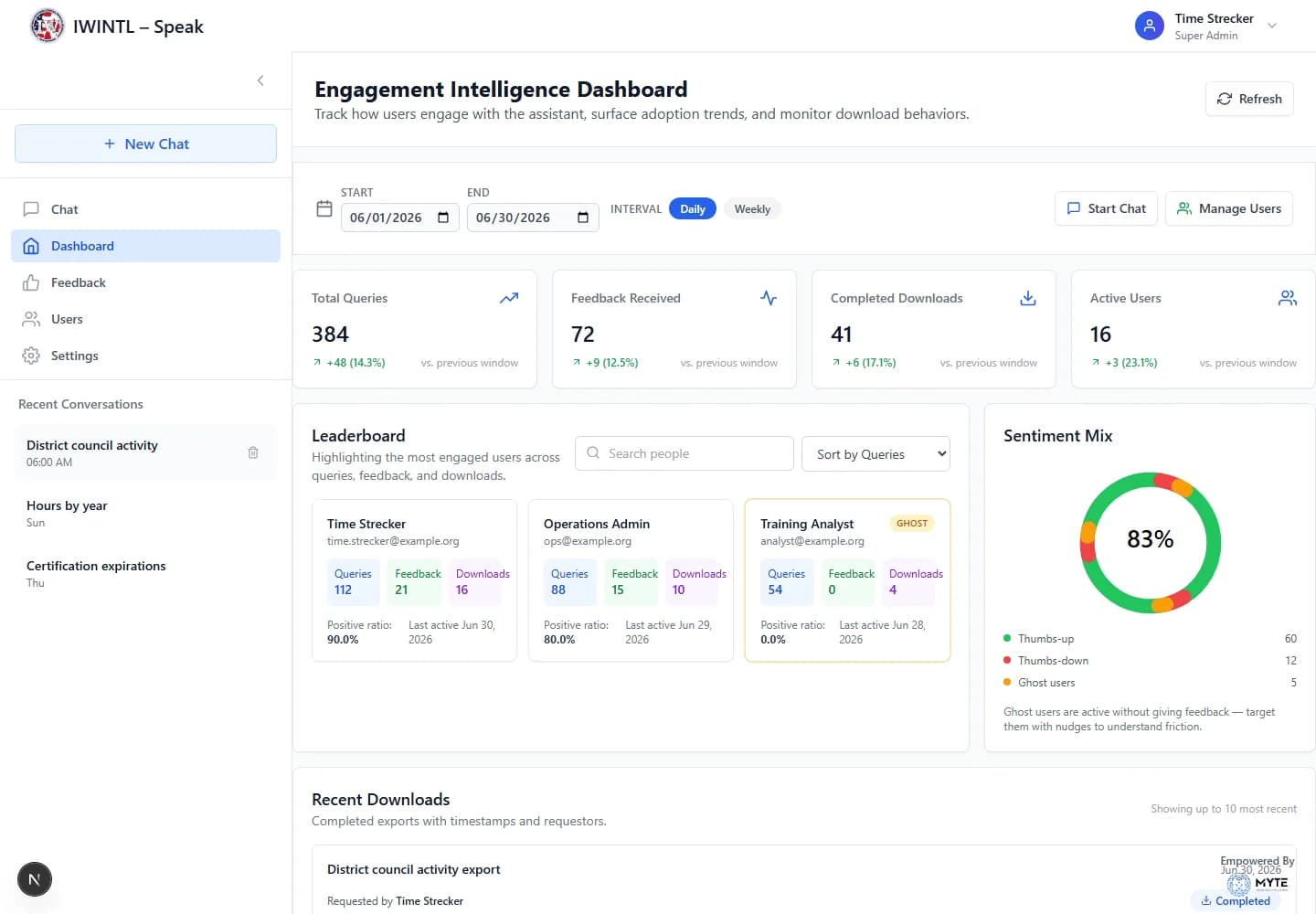
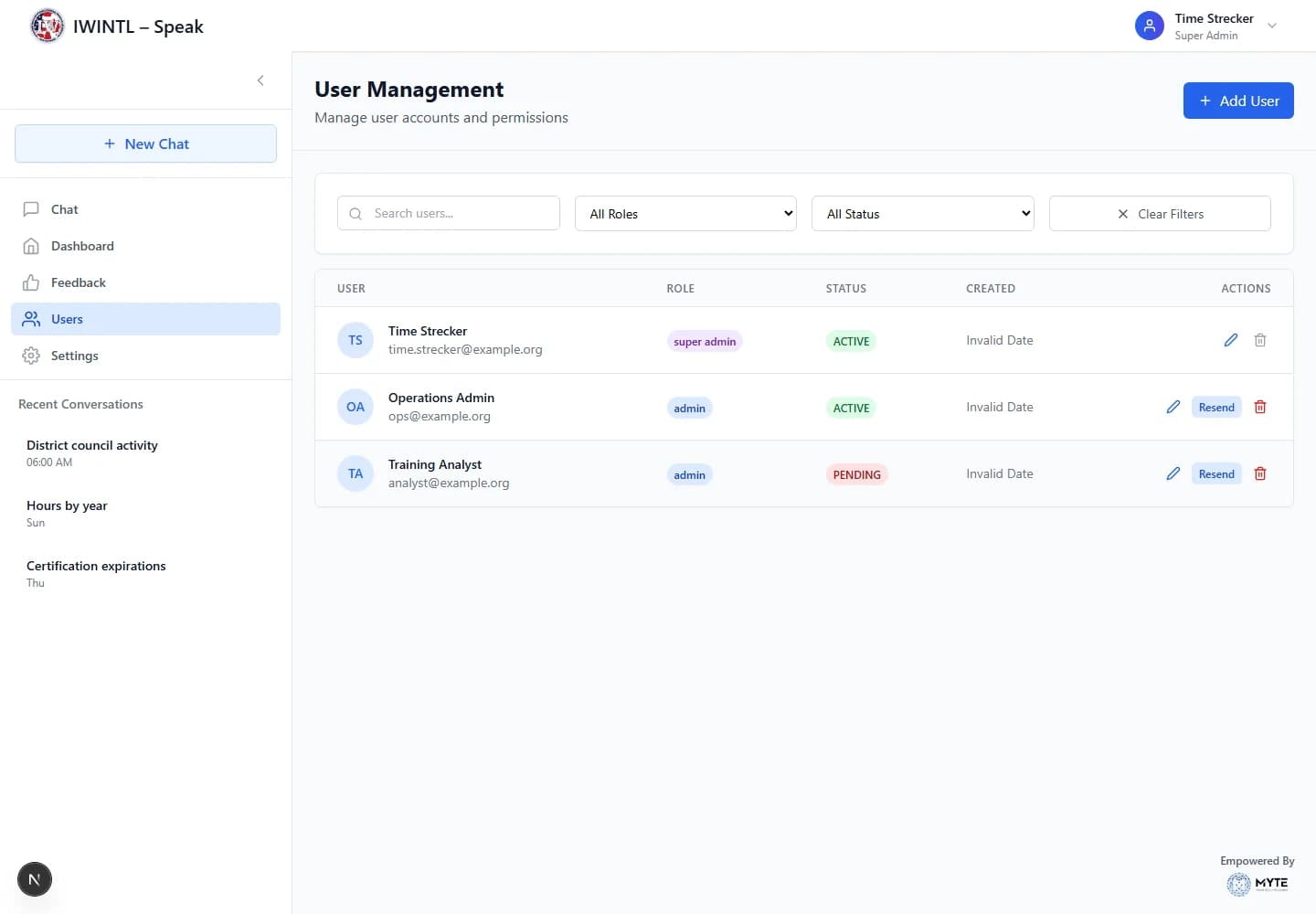
Approved screenshots and workflow examples that show how the operating model works in practice.
Questions operators ask
What is deterministic retrieval?
It is a controlled process where a plain-language request maps to validated data queries and governed outputs.
Why not let the LLM query everything?
Because sensitive data needs permissions, validation, allowed metrics, and reviewable evidence.
Can users still ask in simple language?
Yes. The interface can stay conversational while the backend remains controlled.
What outputs should be returned?
Numbers, tables, charts, short explanations, and blocked-request messages when needed.
Can this work with local inference?
Yes. Local or private inference can be combined with deterministic retrieval depending on the posture required.
Related field notes
Private AI for Union Data Is Not a Chatbot. It Is a Trust Boundary.
A useful union AI system lets leaders ask simple questions while keeping real data behind governed retrieval, normalization, permissions, and deterministic server logic.
Read noteUnion Organizing Software Should Preserve Field Momentum
Organizing succeeds when field conversations, contacts, campaign state, next actions, and leadership visibility become shared memory.
Read noteMarket Recovery Needs a System, Not a Wall of Follow-Up Notes
Market recovery work succeeds when contractors, opportunities, contacts, status, field intelligence, and follow-up become shared operating memory.
Read noteBuild your owned operating system with Myte
Start with one workflow your team already understands, then turn it into software your business owns.