Market Recovery Needs a System, Not a Wall of Follow-Up Notes
Market recovery work succeeds when contractors, opportunities, contacts, status, field intelligence, and follow-up become shared operating memory.
The operator moment
A business manager or organizer hears about a project, contractor, or opening. The information is valuable only if it becomes actionable. If the detail stays in a phone note or hallway conversation, the organization cannot coordinate around it or learn from it later.
The hidden cost
The hidden cost is lost timing. A missed follow-up can lose an opening, but the bigger loss is weak institutional memory. When market recovery context lives in scattered personal systems, every new push starts from partial knowledge.
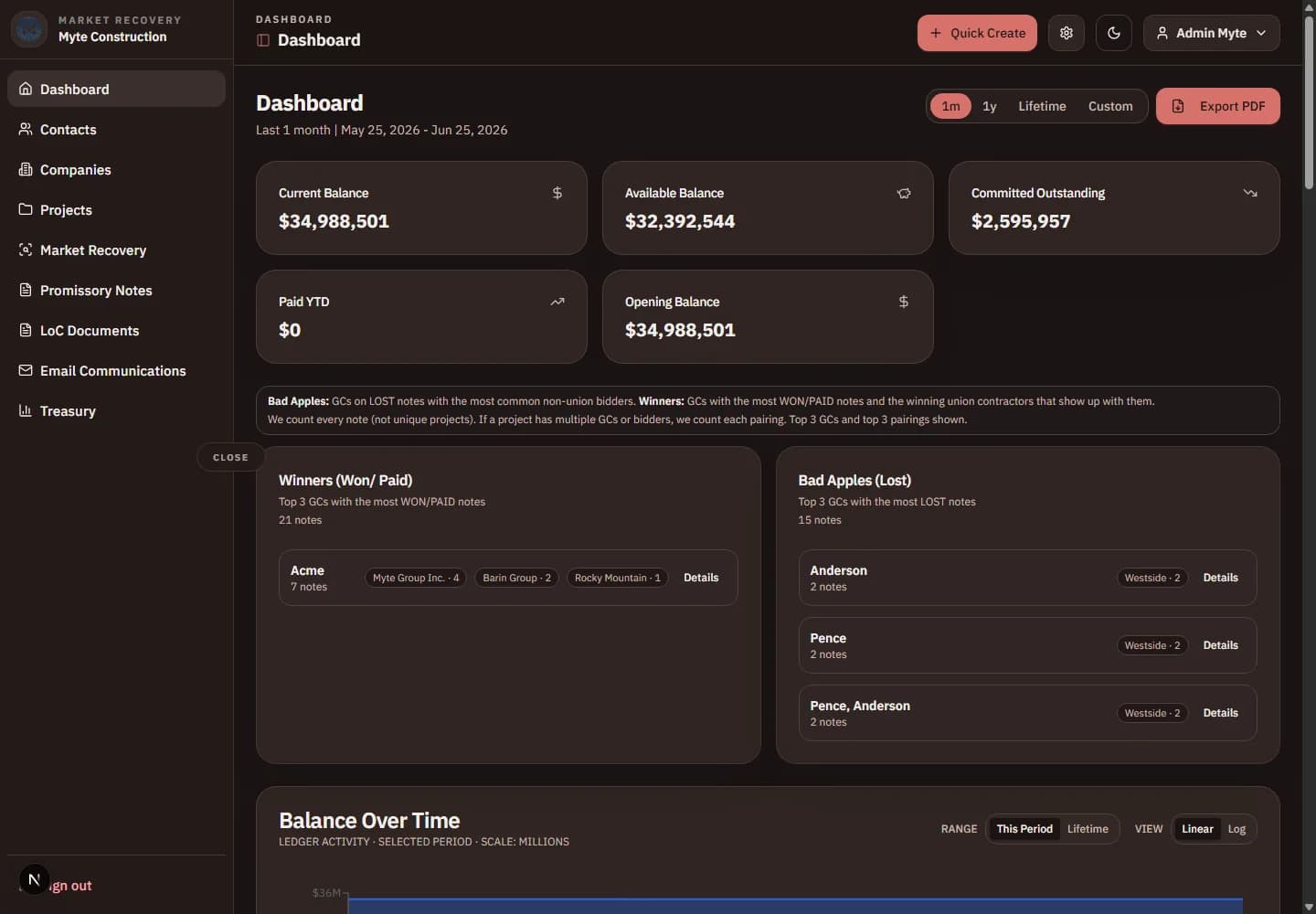
A CRM may store contractors, but market recovery also needs campaign context, opportunity stage, field notes, labor signals, relationship history, next action, and shared accountability. It is not sales software with union labels; it is union strategy made operational.
What changes when the system is owned
Workflow map
How to read the proof
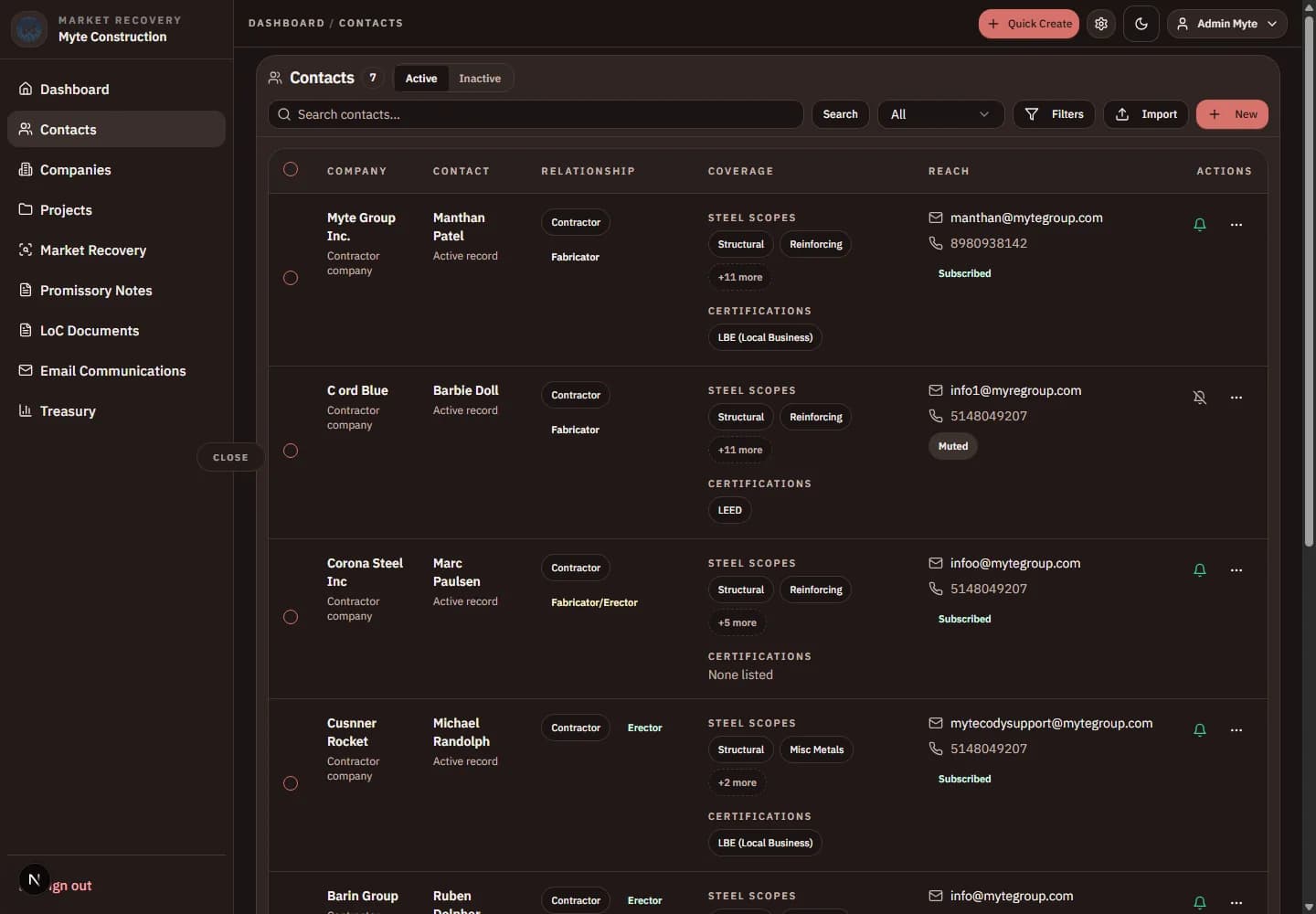
The system should treat contractors, contacts, opportunities, actions, stages, notes, and outcomes as structured records. That lets the union search, report, escalate, and eventually ask private AI for summaries without losing governance.
How Myte delivers it
- 1Map how market recovery intelligence currently enters the organization and where it gets lost.
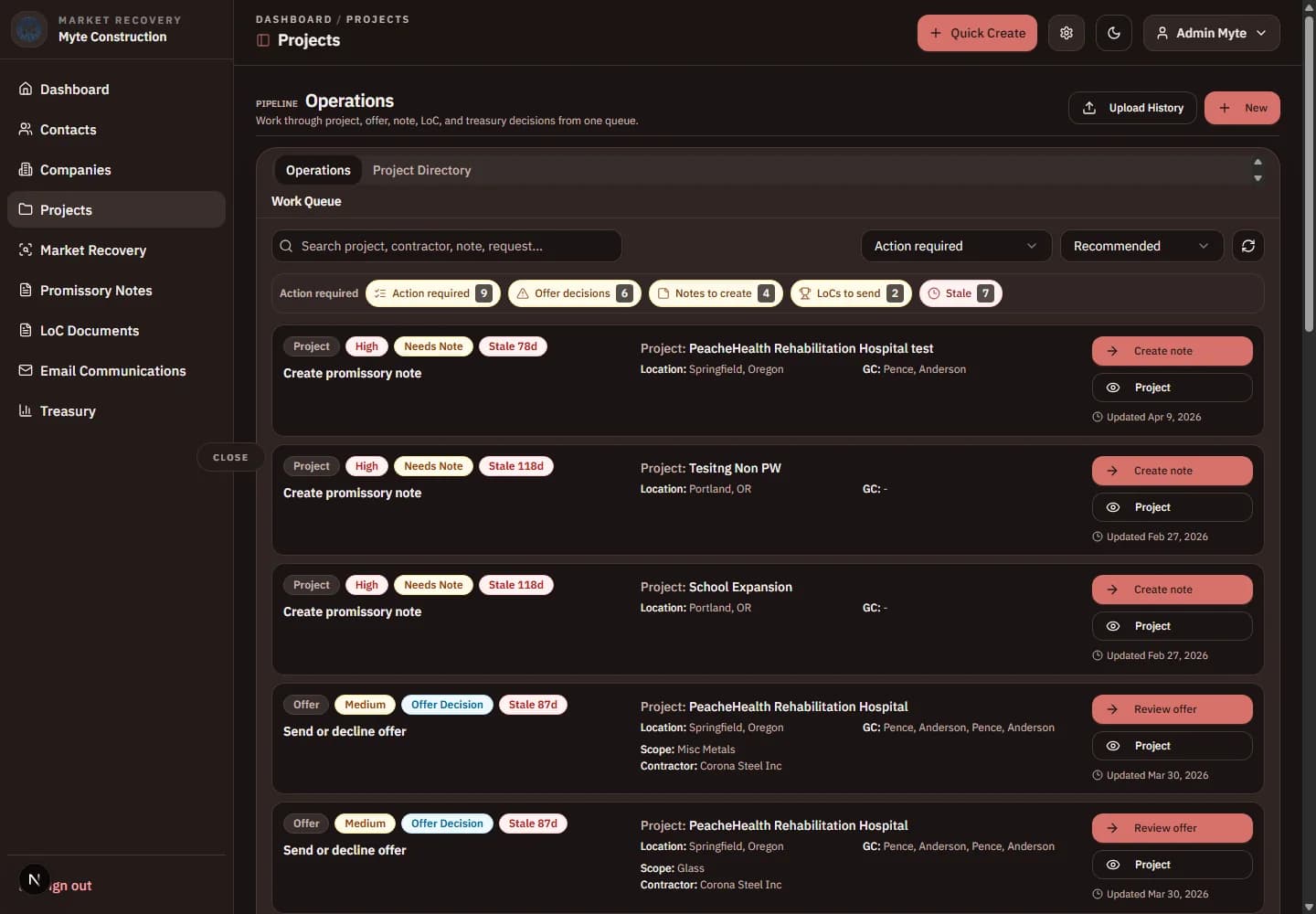
- 2Build the contractor and opportunity workspace with stage, owner, notes, and next action.
- 3Train the staff to use the board as the shared memory for active recovery work.
- 4Extend into reporting, organizer links, dispatch context, leadership dashboards, and AI summaries.
Buyer checklist
Why this belongs in your operating system
Myte builds market recovery software around the union operating reality. We preserve relationship intelligence, timing, status, and follow-up so the organization can act with continuity instead of rebuilding context.
Approved screenshots and workflow examples that show how the operating model works in practice.
Questions operators ask
What is market recovery software?
It is a system for contractor relationships, opportunities, field intelligence, status, next action, and outcome tracking.
Is this a CRM?
It can include CRM-like records, but it is built around union market recovery strategy and follow-up.
Who uses it?
Business managers, organizers, staff, leadership, and anyone responsible for recovery action or reporting.
Can it connect with dispatch?
Yes. Contractor and opportunity context can inform dispatch, organizing, reporting, and leadership views.
Can AI summarize the pipeline?
Yes, once the underlying records are structured and governed.
Where should a union start?
Start with contractor records, opportunity stage, owner, next action, and outcome history.
Related field notes
Union Organizing Software Should Preserve Field Momentum
Organizing succeeds when field conversations, contacts, campaign state, next actions, and leadership visibility become shared memory.
Read noteWhat a Union Dispatch Operating System Must Make Visible
Dispatch is not only a queue. It is a trust workflow between contractor requests, staff review, member offers, referrals, and accountable follow-up.
Read notePrivate AI for Union Data Is Not a Chatbot. It Is a Trust Boundary.
A useful union AI system lets leaders ask simple questions while keeping real data behind governed retrieval, normalization, permissions, and deterministic server logic.
Read noteBuild your owned operating system with Myte
Start with one workflow your team already understands, then turn it into software your business owns.