What a Structural Steel Operating System Actually Owns
Steel work gets expensive when bid context, documents, follow-up, and field handoff live in too many places. An owned operating system keeps the story of the job together.
The operator moment
The pressure usually appears as a simple question: who owns this bid, what changed, what did we send, who is waiting for follow-up, and what does the field need to know before work moves? When the answer lives across inboxes, spreadsheets, file folders, and human memory, the team spends valuable time rebuilding context instead of acting.
The hidden cost
The obvious cost is a missed follow-up. The deeper cost is repeated reconstruction. Estimators re-open old assumptions, coordinators hunt for files, managers ask for verbal summaries, and field teams inherit incomplete context. Every restart becomes a quiet tax on margin, speed, and confidence.
A generic CRM can track a client. A document drive can hold files. A spreadsheet can list bids. None of those tools naturally understands the relationship between an RFQ, bid package, estimating decision, office responsibility, field handoff, and next action. The system has to own that relationship.
What changes when the system is owned
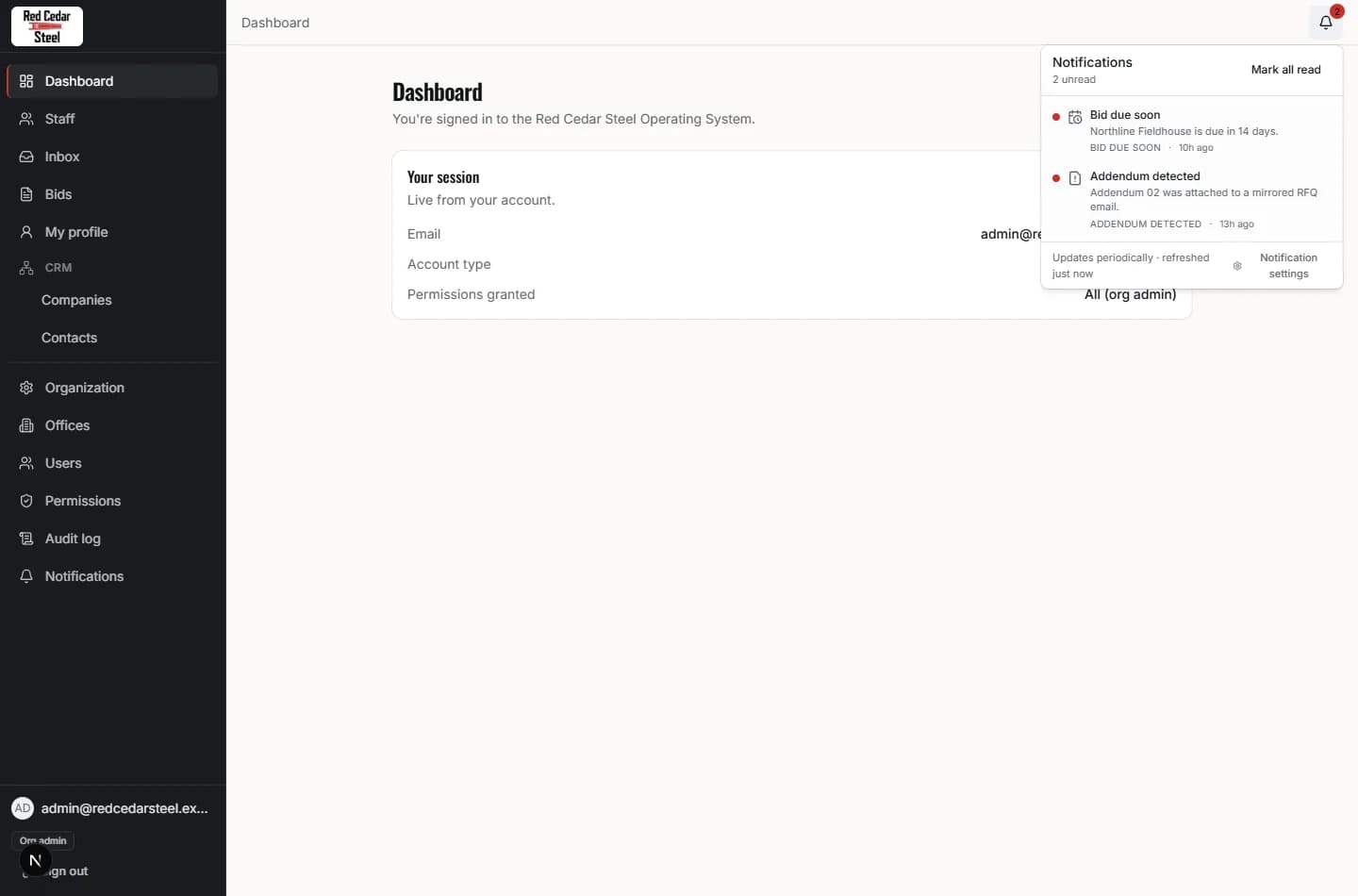
Workflow map
How to read the proof
The important engineering decision is the data model. Users, offices, roles, organizations, bids, documents, activities, statuses, and notes need to be durable records with permissions and history. Once the model is right, AI can assist with summaries and retrieval without becoming the source of truth.
How Myte delivers it
- 1Map the current bid journey, the real actors, the language the team uses, and the records that must become permanent.
- 2Build the first production slice around RFQ intake, bid record, document attachment, permissions, and follow-up.
- 3Train the team with the system open so operators can challenge the model before it spreads.
- 4Extend into estimating, office coordination, field handoff, reporting, and private AI assistance only after adoption is real.
Buyer checklist
Why this belongs in your operating system
A structural steel operating system is worth building when the workflow itself is part of the company knowledge. Myte does not glue a few apps together and call it transformation. We build the owned stack around how the contractor works, then maintain, document, and train the team so the business can keep extending it.
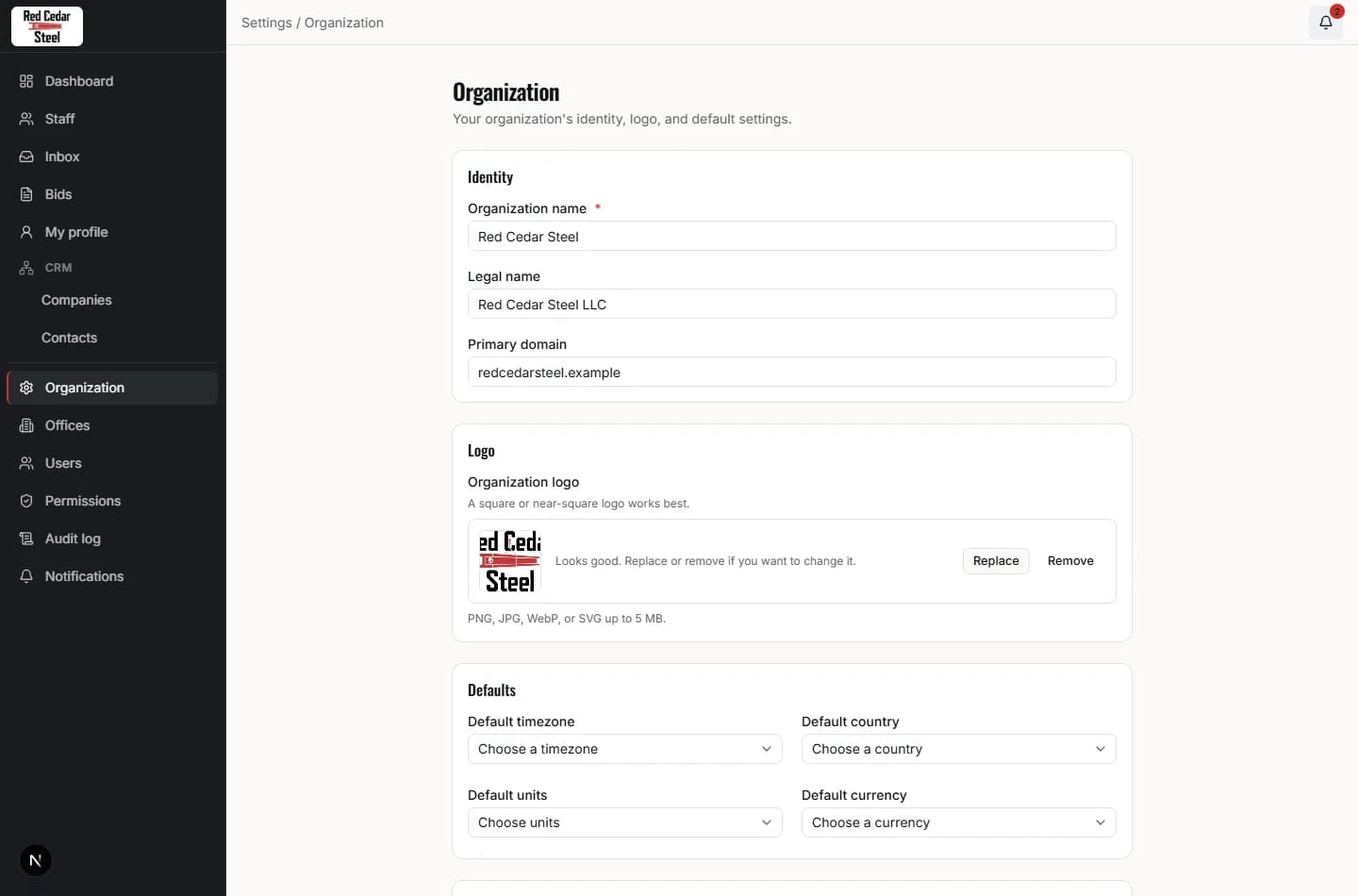
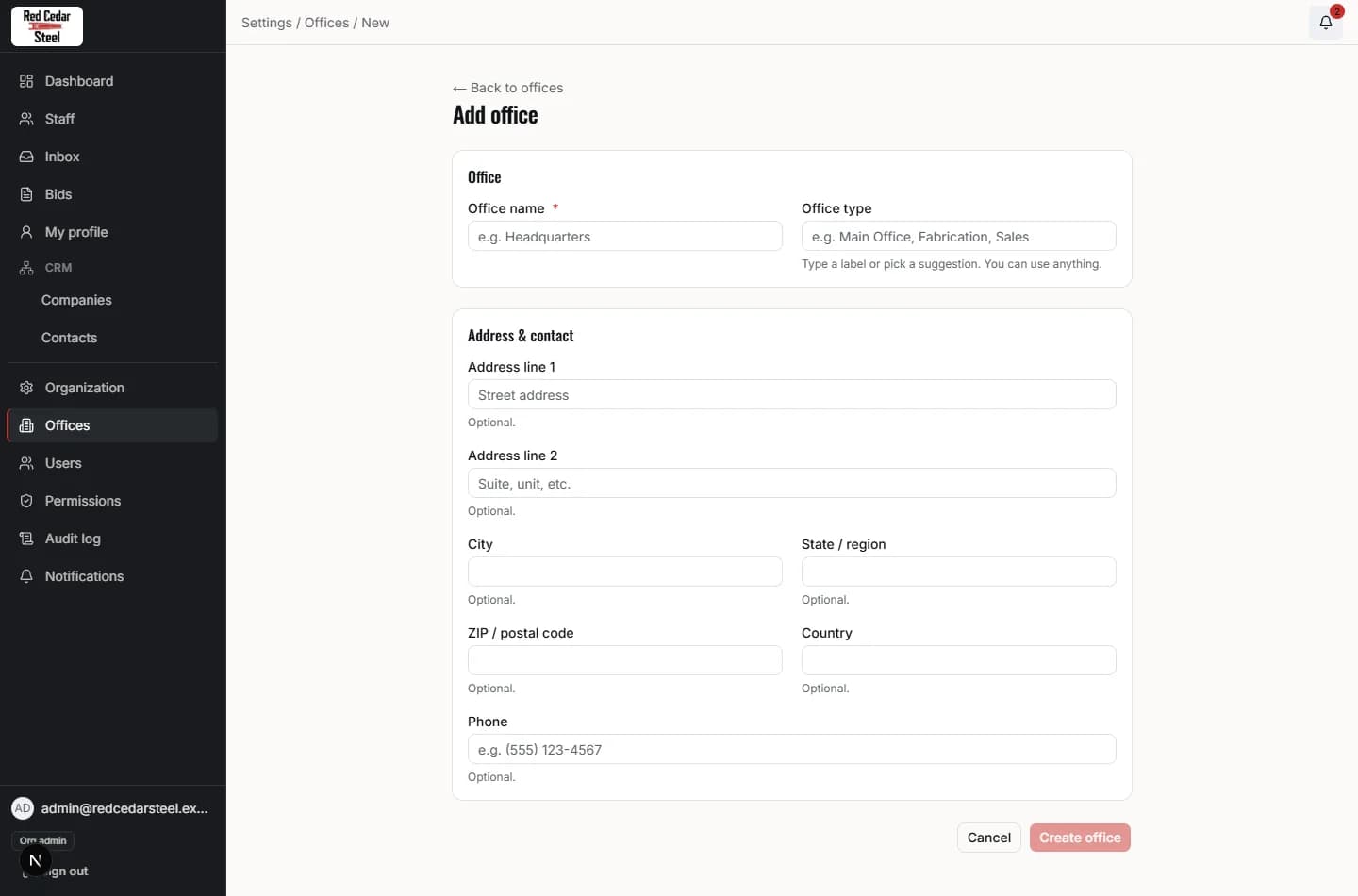
Approved screenshots and workflow examples that show how the operating model works in practice.
Questions operators ask
What is a structural steel operating system?
It is owned software that connects sales, RFQ intake, estimating, bid records, documents, permissions, office workflow, and field handoff around the contractor operating model.
Is this the same as buying construction SaaS?
No. SaaS asks the business to fit a vendor workflow. An owned operating system models the business and can change as the contractor changes.
Why does bid memory matter?
Bid memory keeps context, documents, decisions, people, and follow-up attached to the record so the team does not rebuild the job story every time work resumes.
Can this connect estimating and field management?
Yes. The point is to preserve what estimating knew and promised so office and field teams receive context instead of fragments.
What should the first slice include?
Start with the workflow under the most pressure: RFQ intake, bid record, follow-up, document attachment, permissions, and the first handoff view.
Who owns the system after delivery?
The client owns the operating model and should receive documentation, training, and a handoff path. Myte can also manage the deployed environment.
Related field notes
RFQ Intake for Structural Steel Contractors Should Not Start in an Inbox
RFQ intake is the first place a steel contractor can protect context, ownership, documents, deadlines, and estimating readiness.
Read noteBid Memory Is the Estimating Asset Most Contractors Forget to Build
Estimating teams do more than price work. They create knowledge about scope, risk, client behavior, documents, deadlines, and field promises.
Read noteVoice Timesheets Only Work When the Office Can Trust the Record
Voice capture is valuable only when speech becomes a structured, editable, auditable timesheet connected to crews, projects, cost codes, and office approval.
Read noteBuild your owned operating system with Myte
Start with one workflow your team already understands, then turn it into software your business owns.