RFQ Intake for Structural Steel Contractors Should Not Start in an Inbox
RFQ intake is the first place a steel contractor can protect context, ownership, documents, deadlines, and estimating readiness.
The operator moment
The estimating team often receives a message with drawings, deadlines, contacts, and vague urgency. Someone has to decide if the RFQ is worth pursuing, whether files are complete, who owns it, and what must happen next. If the system does not capture that decision at intake, the job story begins with holes.
The hidden cost
The hidden cost is estimating friction. Files are downloaded twice, clarifications are asked twice, dates are missed, and managers ask for updates that should already be visible. The business pays for weak intake every time the same opportunity has to be re-understood.
Generic inboxes and CRMs store communication, but they do not naturally create a construction bid record with document readiness, estimating owner, office context, next action, and eventual field handoff. RFQ intake needs to be operational, not clerical.
What changes when the system is owned
Workflow map
How to read the proof
The RFQ record should be its own entity with links to organization, contacts, documents, status, owner, deadlines, and activity. That entity then becomes the anchor for estimating, notifications, handoff, reporting, and future AI-assisted summarization.
How Myte delivers it
- 1Map the current RFQ sources, file types, ownership rules, readiness checks, and decision language.
- 2Build a minimum intake board that creates bid records with documents, owner, deadline, and next action.
- 3Train estimators and coordinators to challenge the statuses until the terms match real work.
- 4Extend into bid memory, alerts, estimating workspaces, management reporting, and field handoff.
Buyer checklist
Why this belongs in your operating system
Myte treats RFQ intake as the opening move of the operating system. We model the decision, the record, and the handoff together so the contractor owns a reliable path from first request to bid response.
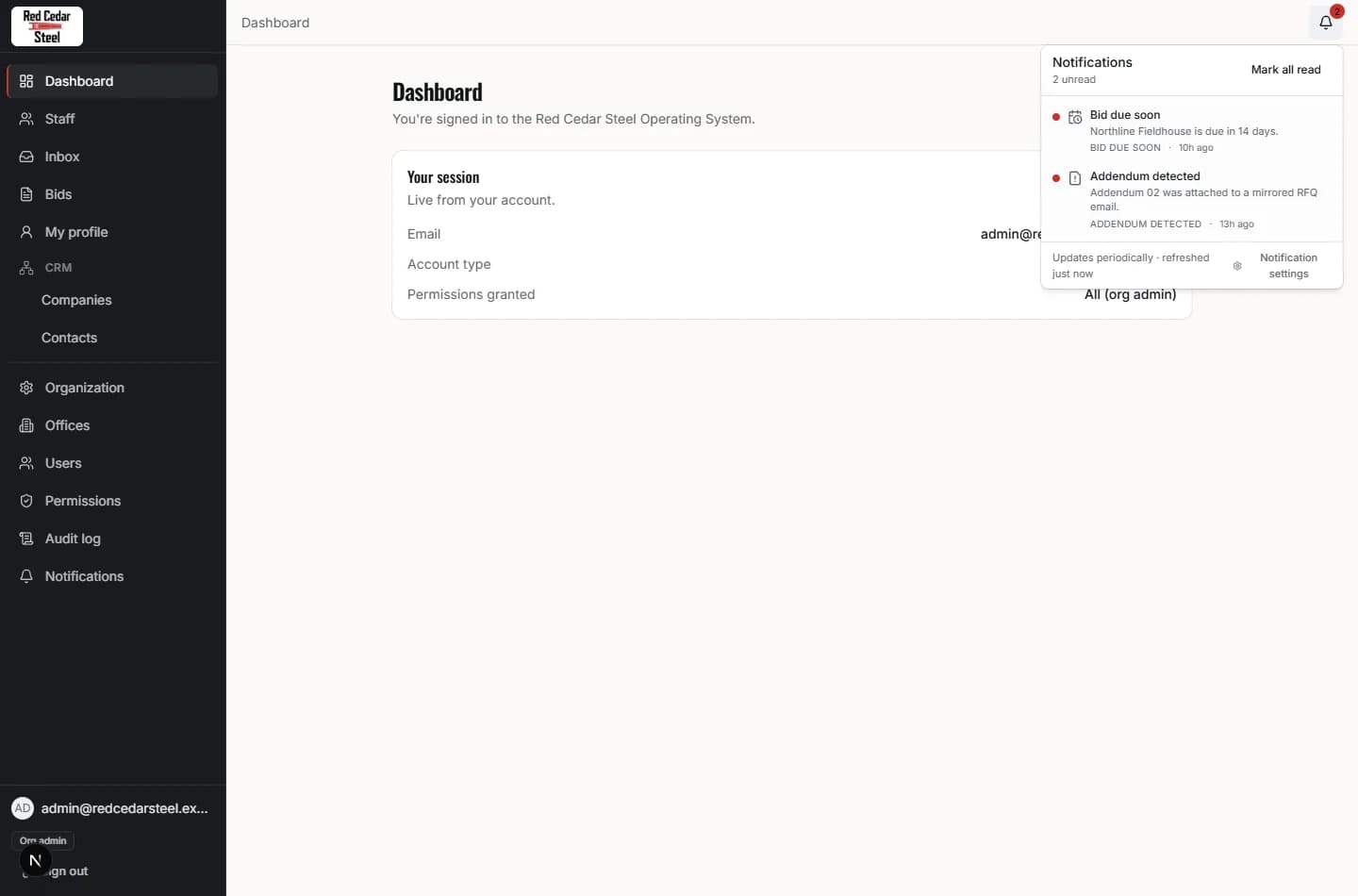
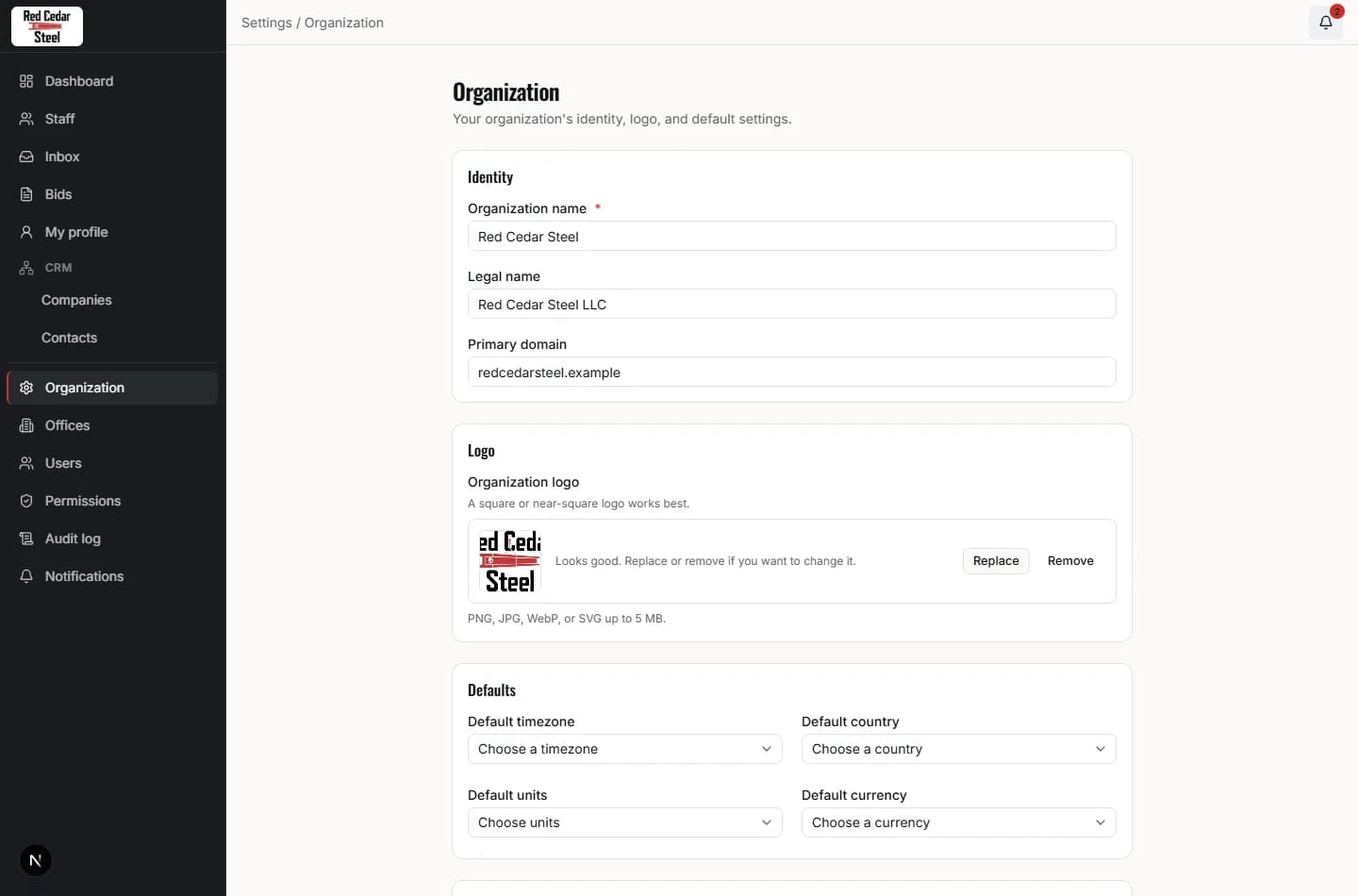
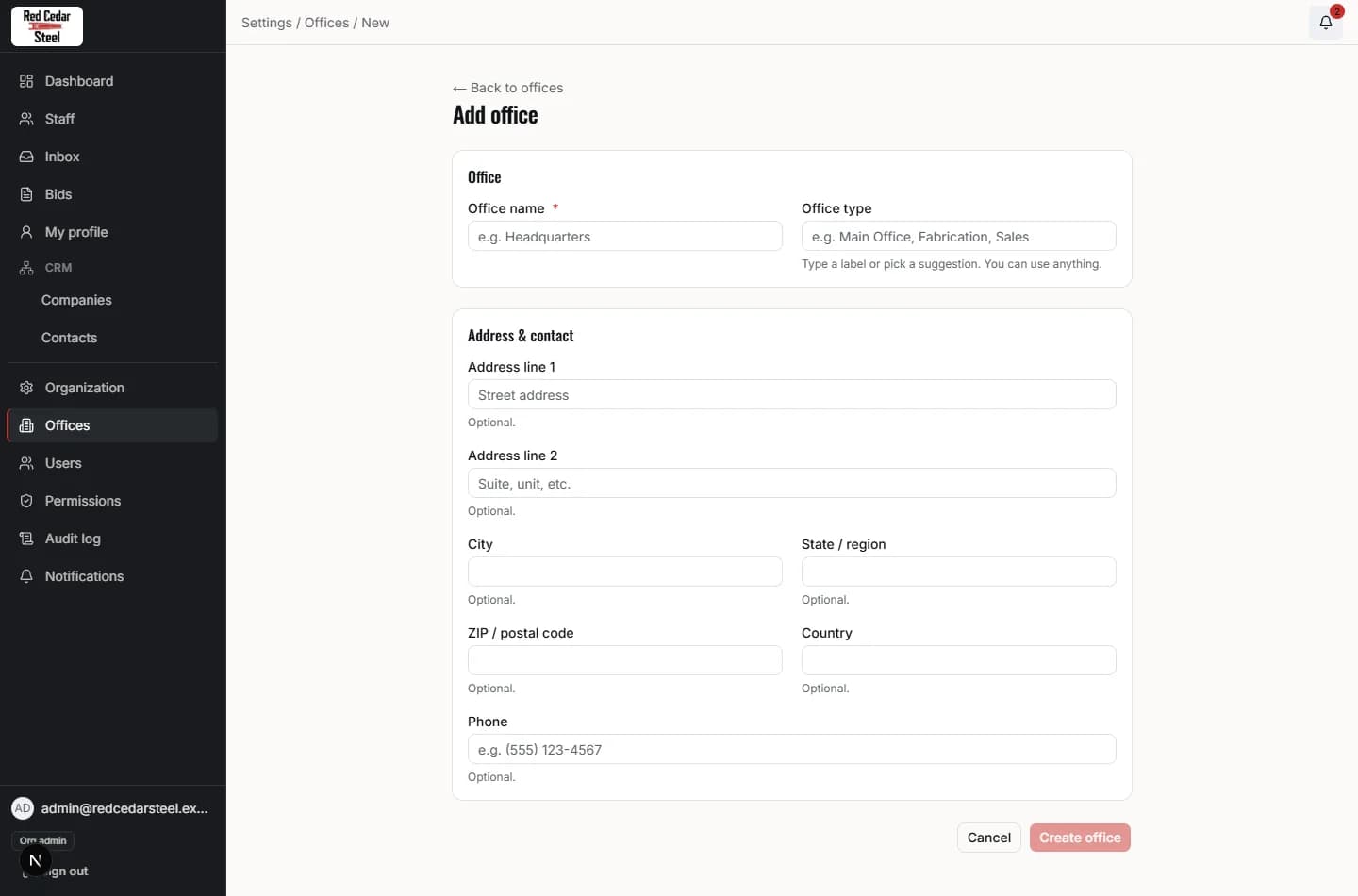
Approved screenshots and workflow examples that show how the operating model works in practice.
Questions operators ask
What should RFQ intake software capture?
Client, contact, files, deadline, scope notes, owner, readiness, status, next action, and activity history.
Can it work with email?
Yes. Email can remain an input, but the system should turn the request into a structured record.
Why connect RFQ intake to estimating?
Estimators need document readiness, context, deadline, ownership, and scope notes before spending detailed effort.
Does this replace the estimator?
No. It prepares the opportunity so estimators spend more time estimating and less time reconstructing context.
Can AI summarize RFQs?
Yes, after the intake model is controlled. AI should assist summaries and extraction without becoming the source of truth.
What is the first implementation slice?
Start with intake board, bid record, file attachment, owner, due date, status, and follow-up.
Related field notes
What a Structural Steel Operating System Actually Owns
Steel work gets expensive when bid context, documents, follow-up, and field handoff live in too many places. An owned operating system keeps the story of the job together.
Read noteBid Memory Is the Estimating Asset Most Contractors Forget to Build
Estimating teams do more than price work. They create knowledge about scope, risk, client behavior, documents, deadlines, and field promises.
Read noteConstruction Document Control Is Stronger When It Lives Beside the Decision
Documents are not enough by themselves. Contractors need the drawings, addenda, decisions, owners, and next actions connected to the operating record.
Read noteBuild your owned operating system with Myte
Start with one workflow your team already understands, then turn it into software your business owns.