
Bid Memory Is the Estimating Asset Most Contractors Forget to Build
Estimating teams do more than price work. They create knowledge about scope, risk, client behavior, documents, deadlines, and field promises.
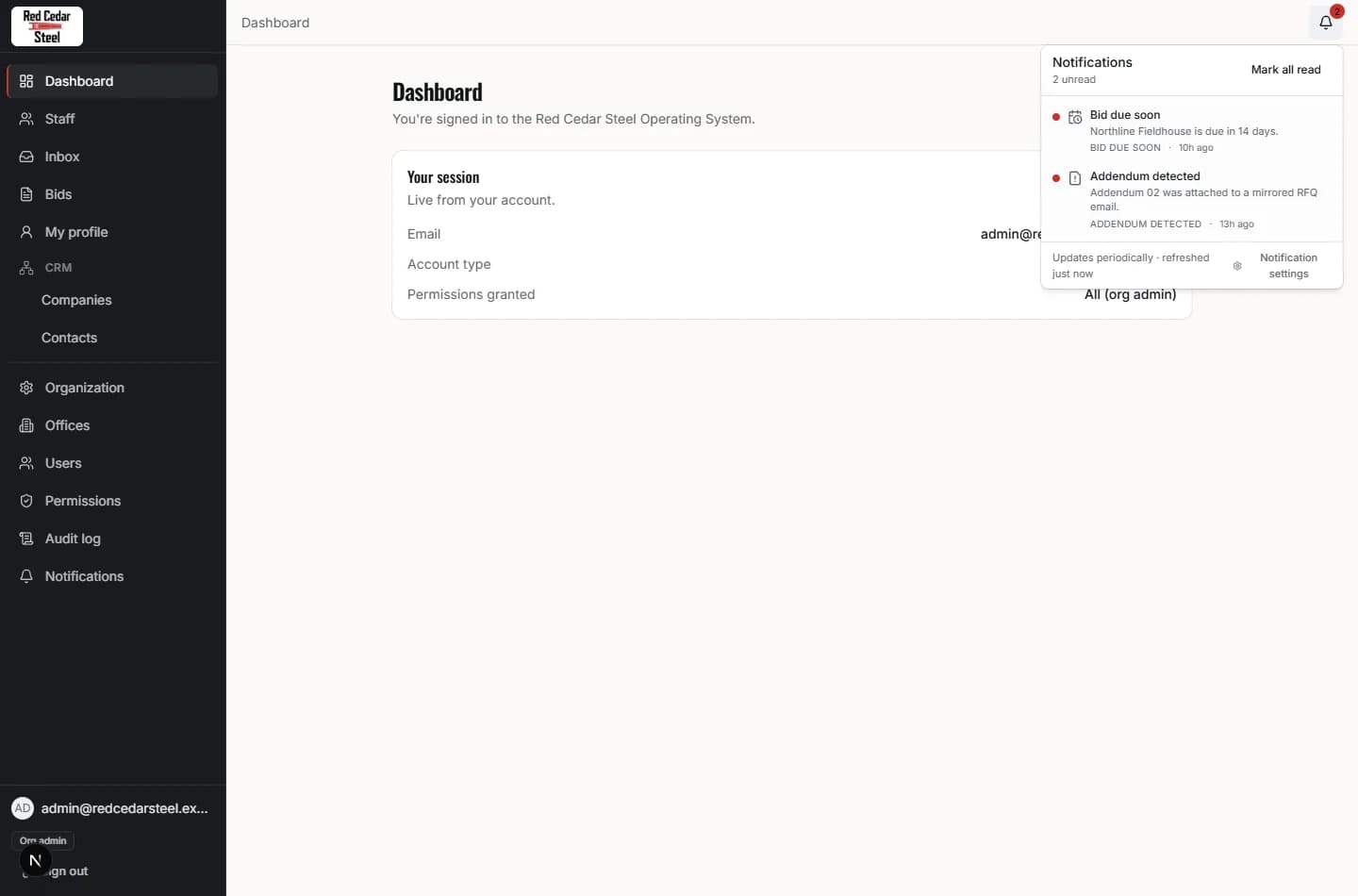
The operator moment
An estimator opens an old opportunity and tries to remember why the number moved, who requested the change, whether the drawings were complete, and what the client cared about. The answer should be in the system, not in a person trying to remember a busy week from months ago.
The hidden cost
Without bid memory, estimating knowledge leaks. New estimators repeat research, managers lose visibility into backlog quality, and the field may receive a job without the reasoning that shaped the bid. The company keeps paying for knowledge that it already created.
A folder stores documents. A CRM stores activity. Estimating software may calculate quantities or price. Bid memory needs all of those pieces tied to the operating record that explains the commercial and operational story of the bid.
What changes when the system is owned
Workflow map
How to read the proof
Bid memory should be modeled as structured operational data with files, statuses, actors, timestamps, notes, and relationships. That foundation later supports search, reporting, private AI retrieval, and historical analysis without scraping disconnected folders.
How Myte delivers it
- 1Identify which estimating decisions are repeatedly lost or hard to explain later.
- 2Model bid records around scope, files, activity, contacts, due dates, owner, status, and risk notes.
- 3Train estimators to capture the minimum useful context without slowing the estimate.
- 4Add reporting, win-loss learning, handoff packages, and AI retrieval after the memory is trusted.
Buyer checklist
Why this belongs in your operating system
Myte builds bid memory as part of the operating system, not as a note-taking sidecar. The point is to make estimating knowledge durable enough to guide follow-up, handoff, reporting, and future AI assistance.
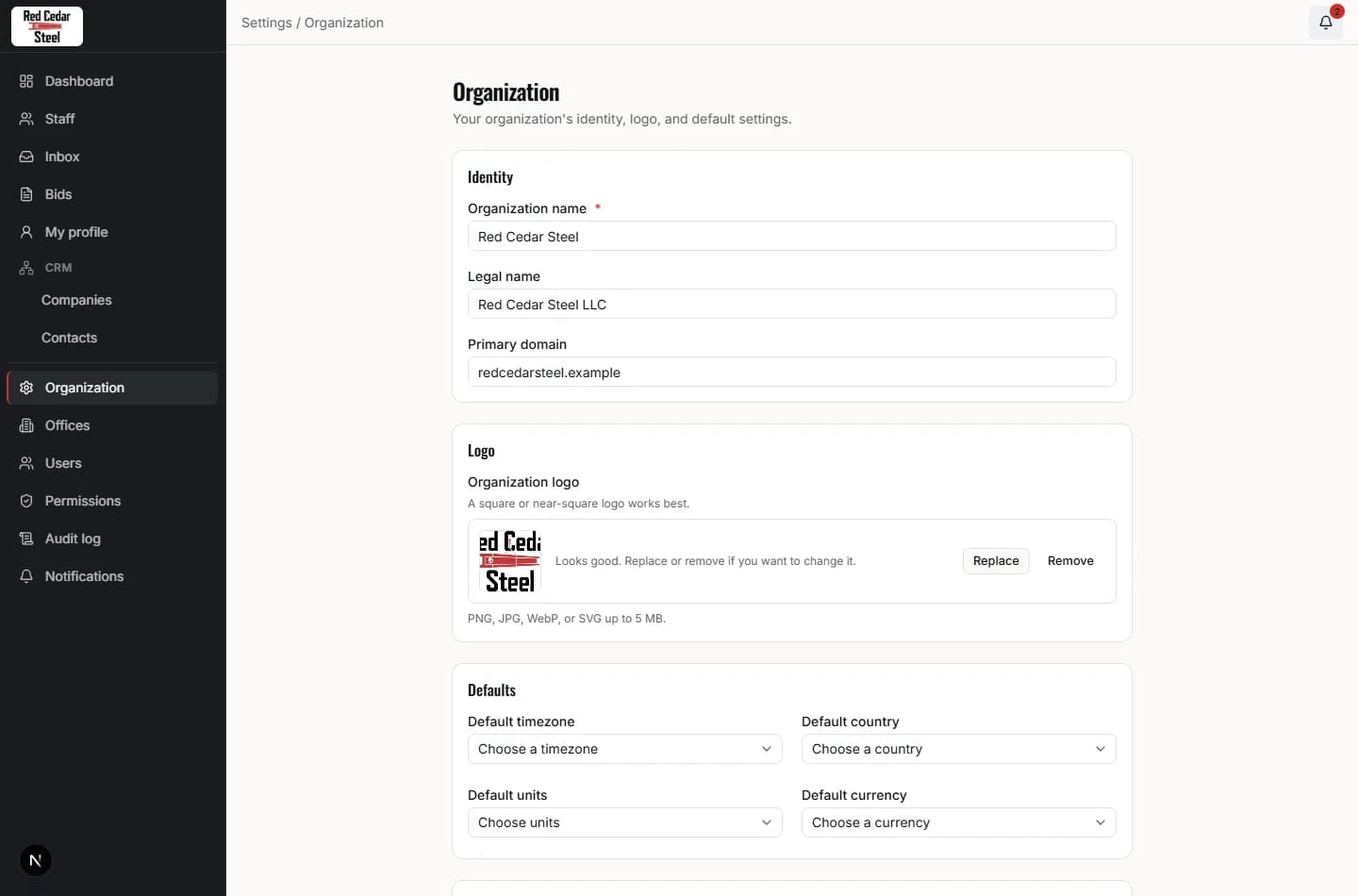
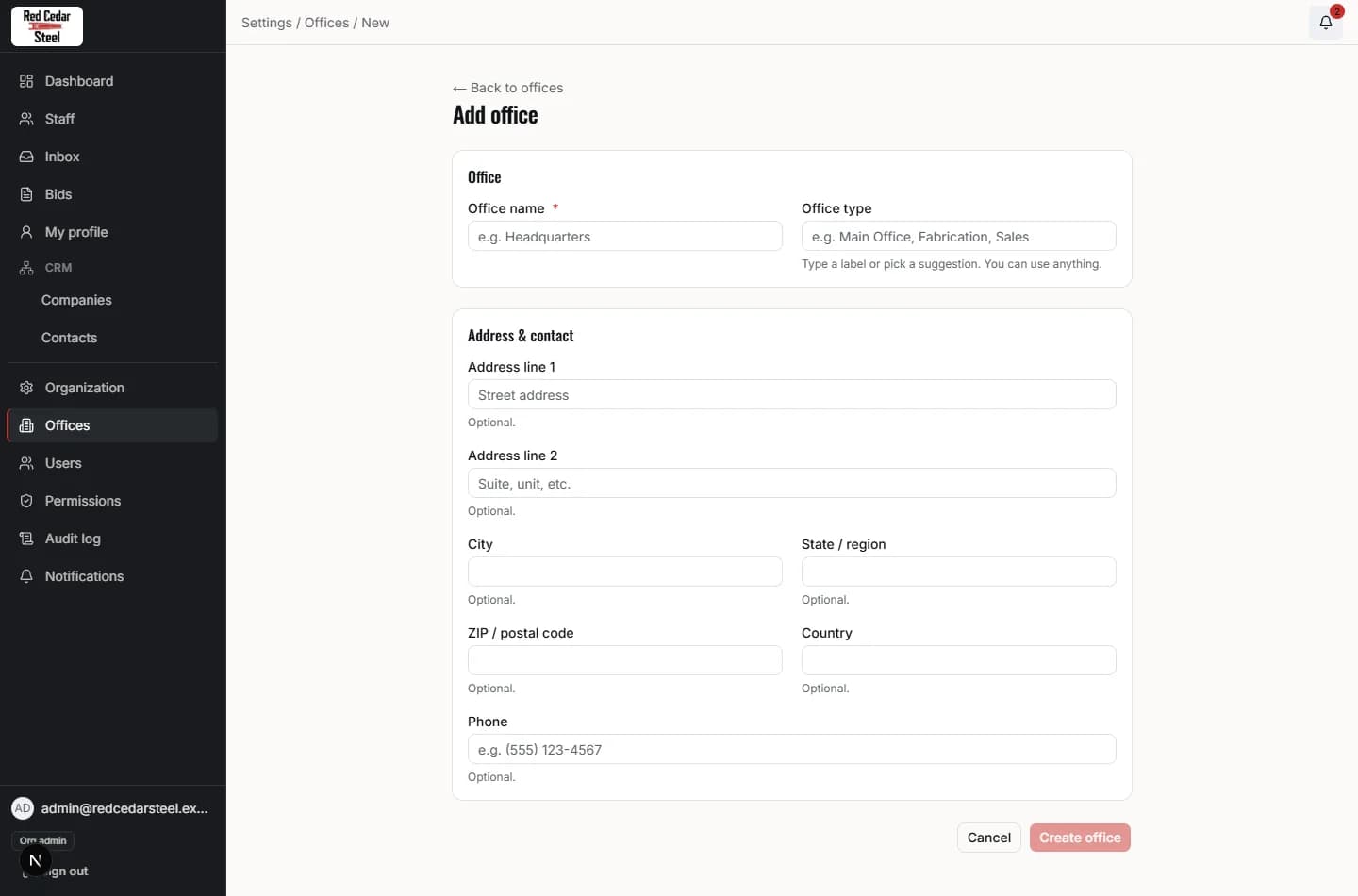
Approved screenshots and workflow examples that show how the operating model works in practice.
Questions operators ask
What is bid memory?
Bid memory is the structured record of scope, files, assumptions, notes, people, activity, status, and decisions behind an estimate.
Why is bid memory different from document storage?
Storage keeps files. Bid memory explains what the files meant and what decisions were made around them.
Does this slow estimators down?
It should not. The workflow should capture the minimum useful context inside the estimating process.
Can bid memory help field handoff?
Yes. The field receives the reasoning behind the bid, not only the final number or folder.
Can AI search bid memory?
Yes, once the data model is structured and governed, private AI can help retrieve past decisions and context.
Where should a contractor start?
Start with active bids, documents, owners, statuses, scope notes, and follow-up history.
Related field notes
What a Structural Steel Operating System Actually Owns
Steel work gets expensive when bid context, documents, follow-up, and field handoff live in too many places. An owned operating system keeps the story of the job together.
Read noteRFQ Intake for Structural Steel Contractors Should Not Start in an Inbox
RFQ intake is the first place a steel contractor can protect context, ownership, documents, deadlines, and estimating readiness.
Read noteVoice Timesheets Only Work When the Office Can Trust the Record
Voice capture is valuable only when speech becomes a structured, editable, auditable timesheet connected to crews, projects, cost codes, and office approval.
Read noteBuild your owned operating system with Myte
Start with one workflow your team already understands, then turn it into software your business owns.