Construction Document Control Is Stronger When It Lives Beside the Decision
Documents are not enough by themselves. Contractors need the drawings, addenda, decisions, owners, and next actions connected to the operating record.
The operator moment
A coordinator searches for the latest drawing set, an estimator checks an addendum, and a manager asks whether the right file was sent. Everyone is touching the same project memory, but not always through the same system.
The hidden cost
The hidden cost is document uncertainty. The team may have the file, but not the confidence: is this current, who reviewed it, what changed, did the estimator use it, and was it sent forward? That uncertainty creates rework and slow follow-up.
Generic document platforms store files well, but they do not automatically understand bid status, estimating readiness, RFQ ownership, addendum impact, or field handoff. The file needs operating context.
What changes when the system is owned
Workflow map
How to read the proof
Documents should be versioned and linked to durable records: bid, organization, contact, activity, status, and handoff. The application should store metadata, permissions, timestamps, and relationships so files can be retrieved by purpose, not only by name.
How Myte delivers it
- 1Map document sources, naming problems, approval moments, revision language, and field handoff needs.
- 2Build file attachment and review status directly into the RFQ and bid record.
- 3Train office and estimating users to attach decisions to documents at the moment of work.
- 4Extend into version controls, notifications, handoff packages, and private AI document summaries.
Buyer checklist
Why this belongs in your operating system
Myte treats documents as part of the operating record. We build the workflow around why the file matters, who owns the decision, and what action should happen next.
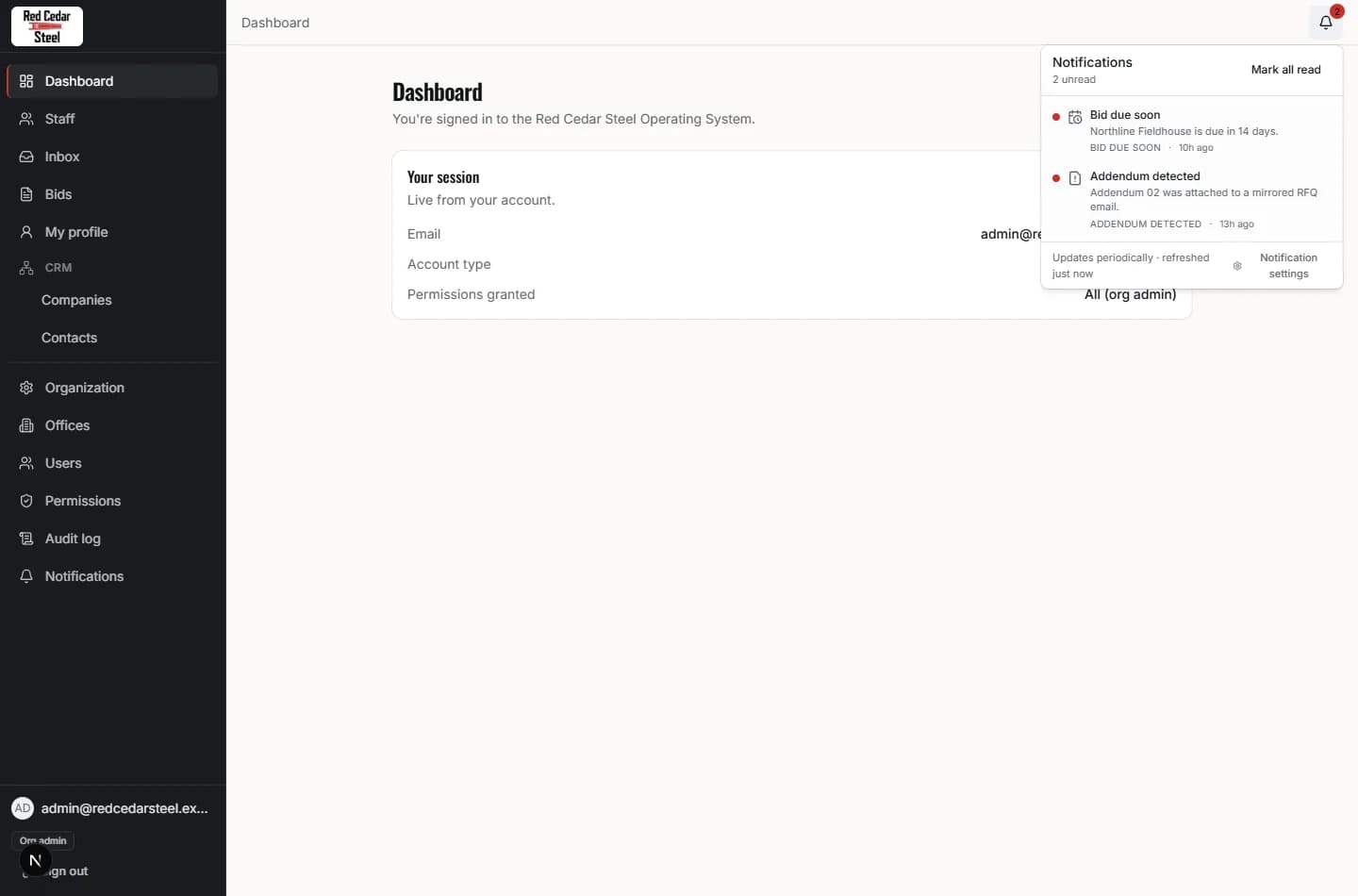
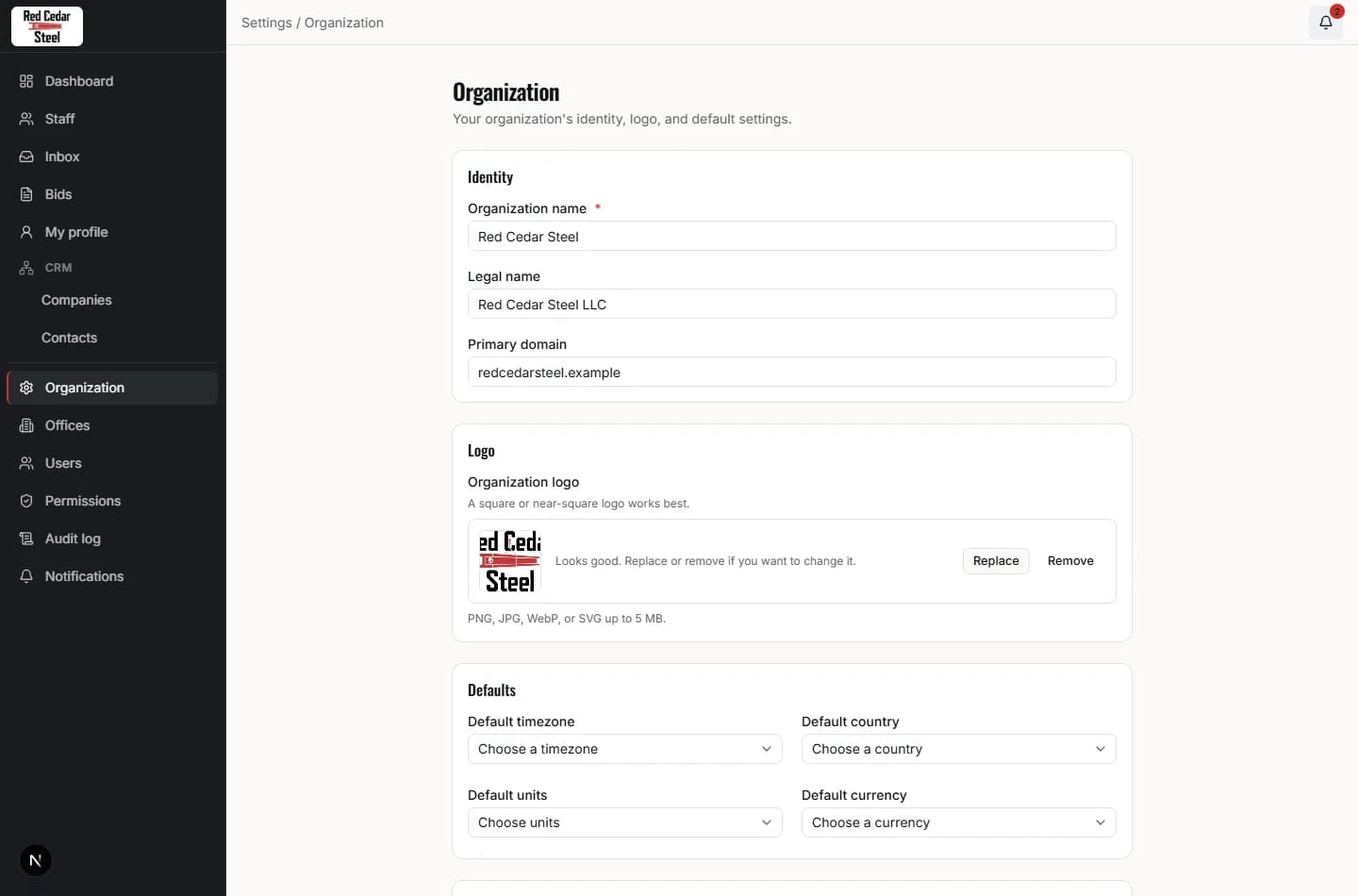
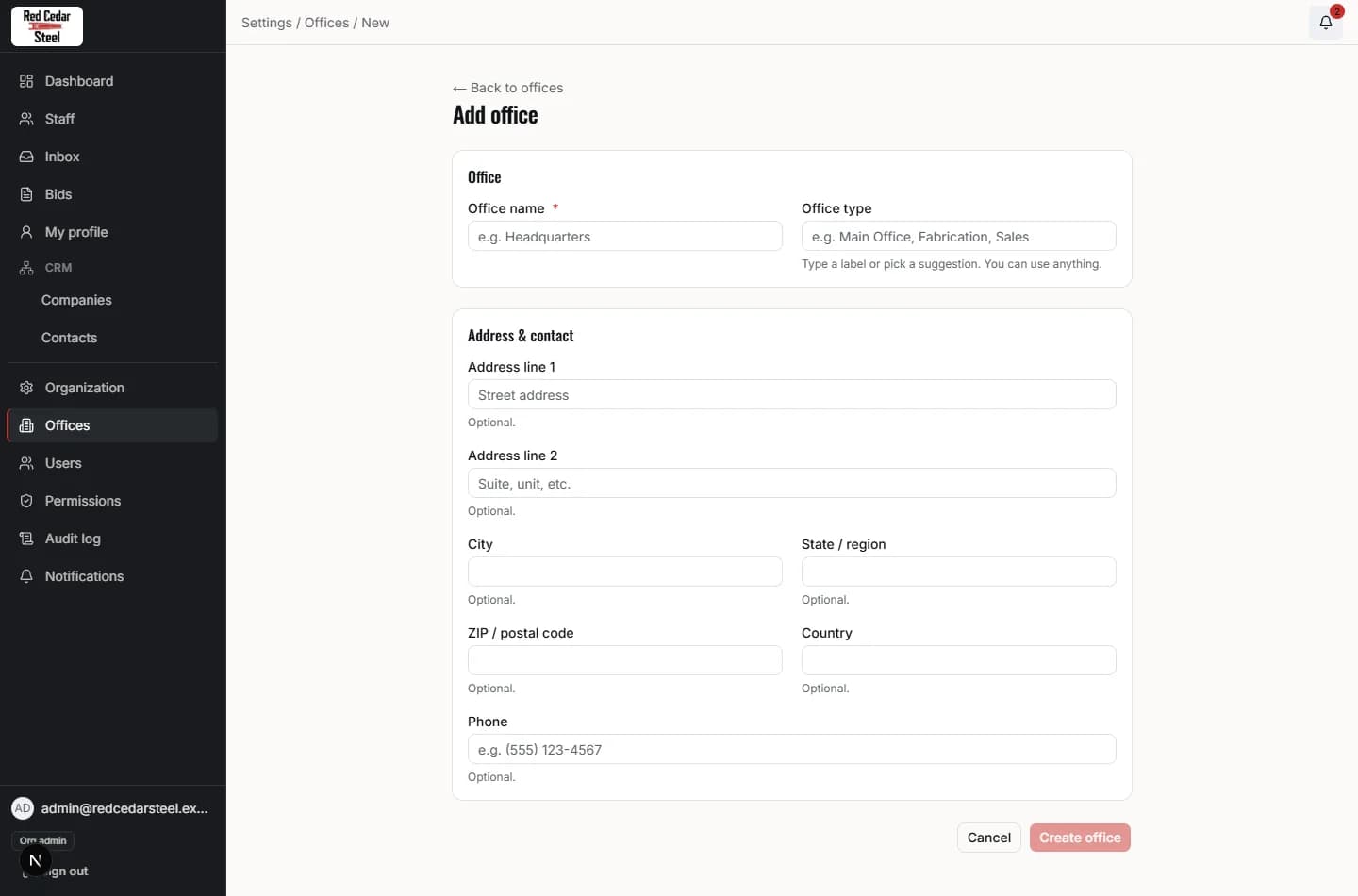
Approved screenshots and workflow examples that show how the operating model works in practice.
Questions operators ask
Is document control more than file storage?
Yes. It connects the file to status, owner, decision, revision, and handoff context.
Can this work with existing storage?
Yes. Existing storage can remain a source while the operating system tracks context and workflow.
Why connect documents to bids?
Bids depend on the right files, revisions, and assumptions. The record should show that connection.
Can AI summarize documents?
Yes, once files are attached to governed records and review boundaries are clear.
What is the first slice?
File attachment, metadata, status, owner, revision notes, and bid linkage.
Related field notes
What a Structural Steel Operating System Actually Owns
Steel work gets expensive when bid context, documents, follow-up, and field handoff live in too many places. An owned operating system keeps the story of the job together.
Read noteRFQ Intake for Structural Steel Contractors Should Not Start in an Inbox
RFQ intake is the first place a steel contractor can protect context, ownership, documents, deadlines, and estimating readiness.
Read noteBid Memory Is the Estimating Asset Most Contractors Forget to Build
Estimating teams do more than price work. They create knowledge about scope, risk, client behavior, documents, deadlines, and field promises.
Read noteBuild your owned operating system with Myte
Start with one workflow your team already understands, then turn it into software your business owns.