Private AI for Union Data Is Not a Chatbot. It Is a Trust Boundary.
A useful union AI system lets leaders ask simple questions while keeping real data behind governed retrieval, normalization, permissions, and deterministic server logic.
The operator moment
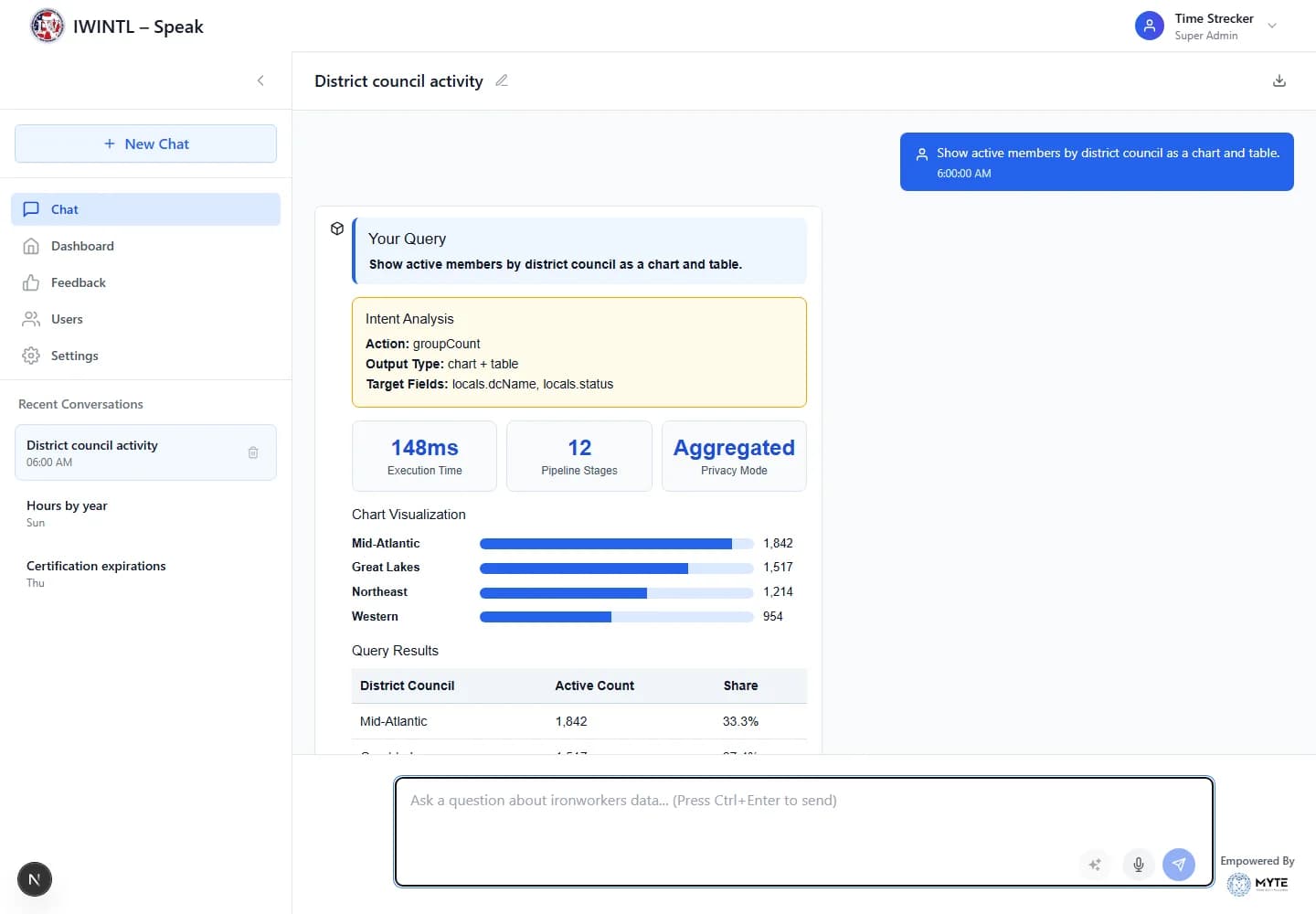
A leader wants to ask a simple question: how many, where, which trend, which group, which date range? They do not want to learn a database language. They also do not want confidential data leaving the environment because a chatbot was bolted onto the side.
The hidden cost
The cost of casual AI is trust loss. If answers are vague, if charts cannot be inspected, or if the model receives data it should not receive, the organization stops trusting the system. The team then returns to manual exports and one-off analysis, even after paying for AI.
Generic AI tools are optimized for broad conversation, not governed retrieval from private structured data. They may sound confident while skipping the controls that matter: schema normalization, access rules, query validation, chart generation, and answer traceability.
What changes when private AI is owned
Workflow map
How to read the proof
The model should not receive raw sensitive data by default. The safer pattern is intent interpretation, validated query planning, deterministic retrieval, aggregation, and controlled answer generation. That architecture lets AI assist without turning the LLM into the database.
How Myte delivers it
- 1Audit the data sources, field names, quality problems, sensitive classes, and questions leaders actually ask.
- 2Normalize and migrate data so retrieval is stable before a chatbot is introduced.
- 3Build the governed question path with allowed metrics, filters, charts, tables, and blocked-query behavior.
- 4Train the team to inspect answers, refine questions, and expand the approved knowledge surface safely.
Buyer checklist
Why this belongs in your operating system
Private AI is not an add-on. It is a governance choice inside the operating system. Myte builds the data model, retrieval controls, interface, and training together so the organization can use AI without giving up control of its institutional knowledge.
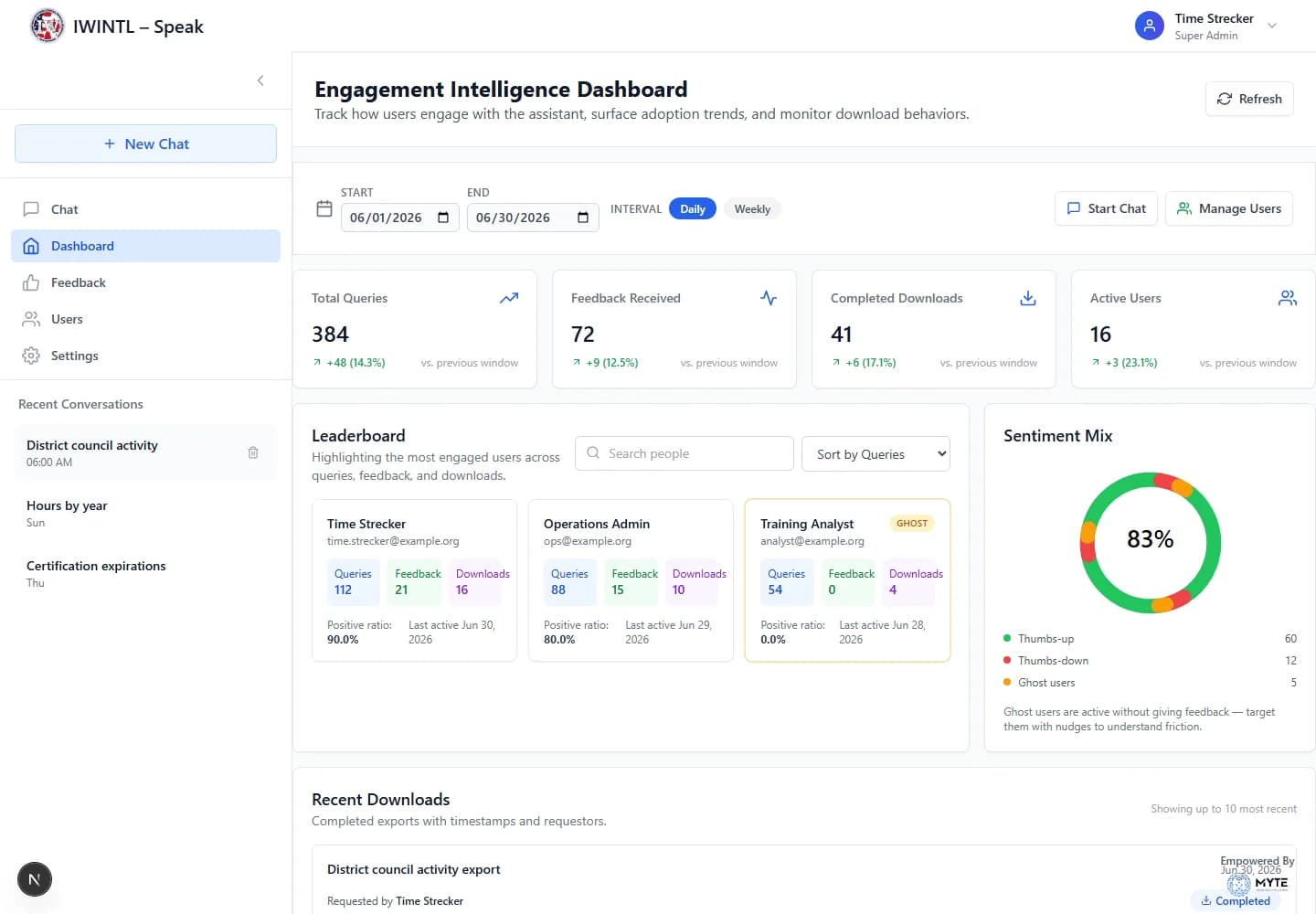
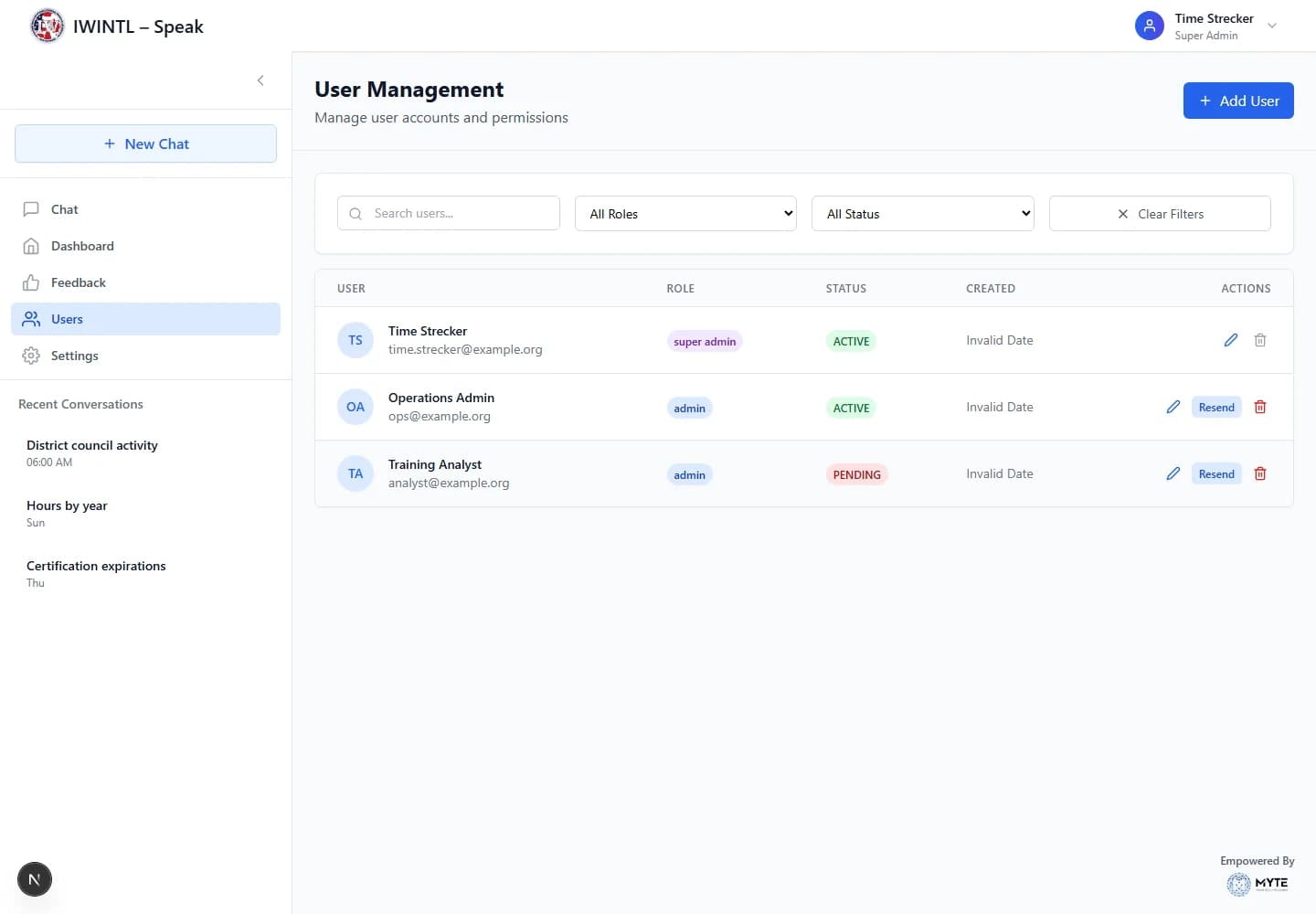
Approved screenshots and workflow examples that show how the operating model works in practice.
Questions operators ask
Can a chatbot answer private union data questions safely?
Yes, when the system uses controlled retrieval, permissions, normalization, and deterministic query logic instead of exposing raw data directly to an external model.
Does the LLM need to see all the data?
No. A safer architecture lets the model understand intent while server-side code retrieves approved aggregates and outputs.
Why are charts and tables important?
They let the user inspect the answer. A paragraph alone can sound convincing without proving the numbers behind it.
What work comes before the chatbot?
Data normalization, migration, schema mapping, permissions, metric definitions, and approved question design.
Can this run with local inference?
Yes. The system can be designed for local or private inference depending on cost, latency, and privacy needs.
Who maintains the knowledge surface?
The organization should own the definitions, and Myte can help maintain the environment, retrieval rules, and model pathway.
Related field notes
Deterministic Retrieval Is How Private AI Earns Trust
Private AI becomes trustworthy when plain-language questions trigger validated retrieval paths, not uncontrolled model guesses.
Read noteUnion Organizing Software Should Preserve Field Momentum
Organizing succeeds when field conversations, contacts, campaign state, next actions, and leadership visibility become shared memory.
Read noteOwn Your Stack: White-Glove Build Today, Self-Serve Power Tomorrow
Myte builds the operating system with you first, then leaves your organization with the documentation, deployment model, and ownership path to keep extending it.
Read noteBuild your owned operating system with Myte
Start with one workflow your team already understands, then turn it into software your business owns.