Healthcare Intake Software Should Reduce Noise Before the Consultation
A patient intake system becomes valuable when registration, questionnaires, pain maps, voice answers, doctor review, and consultation drafts form one clinical workflow.
The operator moment
The patient is often stressed, the clinic is busy, and the doctor has limited time. The system has to gather enough detail without becoming a barrier. If the workflow is designed well, the consultation starts with context: who the patient is, what was answered, what signals matter, and what still needs human review.
The hidden cost
The hidden cost is clinical attention spent on administration. Unstructured intake forces staff and doctors to clarify basic information, search for history, re-enter answers, and manually summarize what the patient already provided. That weakens both patient experience and clinical throughput.
A form builder can collect answers. A portal can store documents. A chatbot can summarize. Healthcare intake needs a governed clinical path: registration, verification, categories, known questionnaires, pain mapping, doctor assignment, draft consultation, audit, and review.
What changes when intake is owned
Workflow map
How to read the proof
The clinical record must remain structured and reviewable. AI can help summarize and draft, but the system should preserve the underlying answers, questionnaire category, timestamp, assignment, edit path, and final clinical decision. That is the difference between helpful automation and unsafe opacity.
How Myte delivers it
- 1Map the patient journey, clinical questionnaires, roles, handoff points, and fields that require review.
- 2Build the first intake path with registration, verification, questionnaire categories, pain map, and dashboard.
- 3Add doctor review, AI profile summary, consultation draft, assignment, and finalization once intake data is reliable.
- 4Extend admin, audit, invitations, feedback, search, and reporting after the core clinical path is trusted.
Buyer checklist
Why this belongs in your operating system
Healthcare software should respect the clinical workflow and the people inside it. Myte builds the operating system around the actual intake, review, and consultation path so AI supports clarity without replacing clinical judgment.
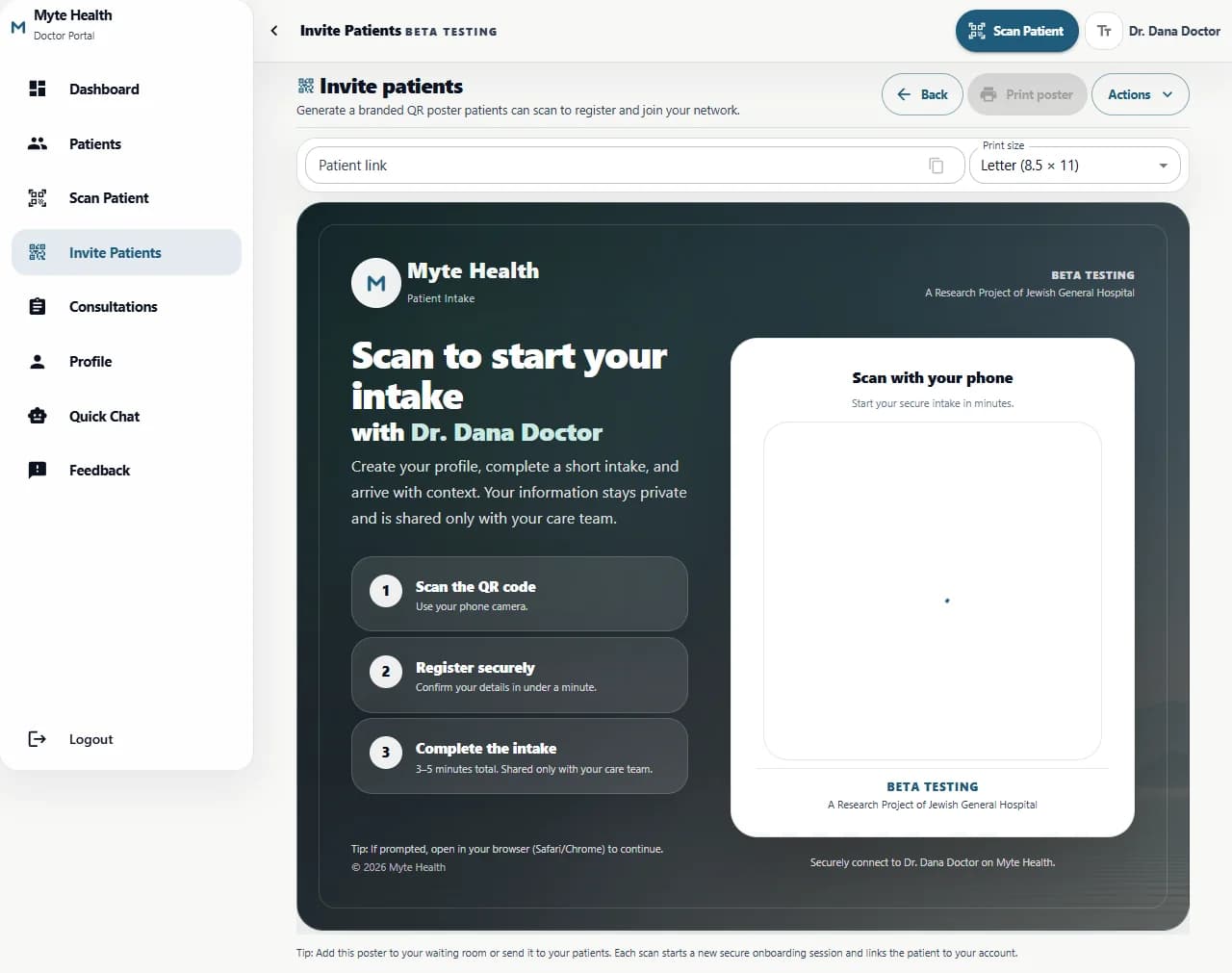
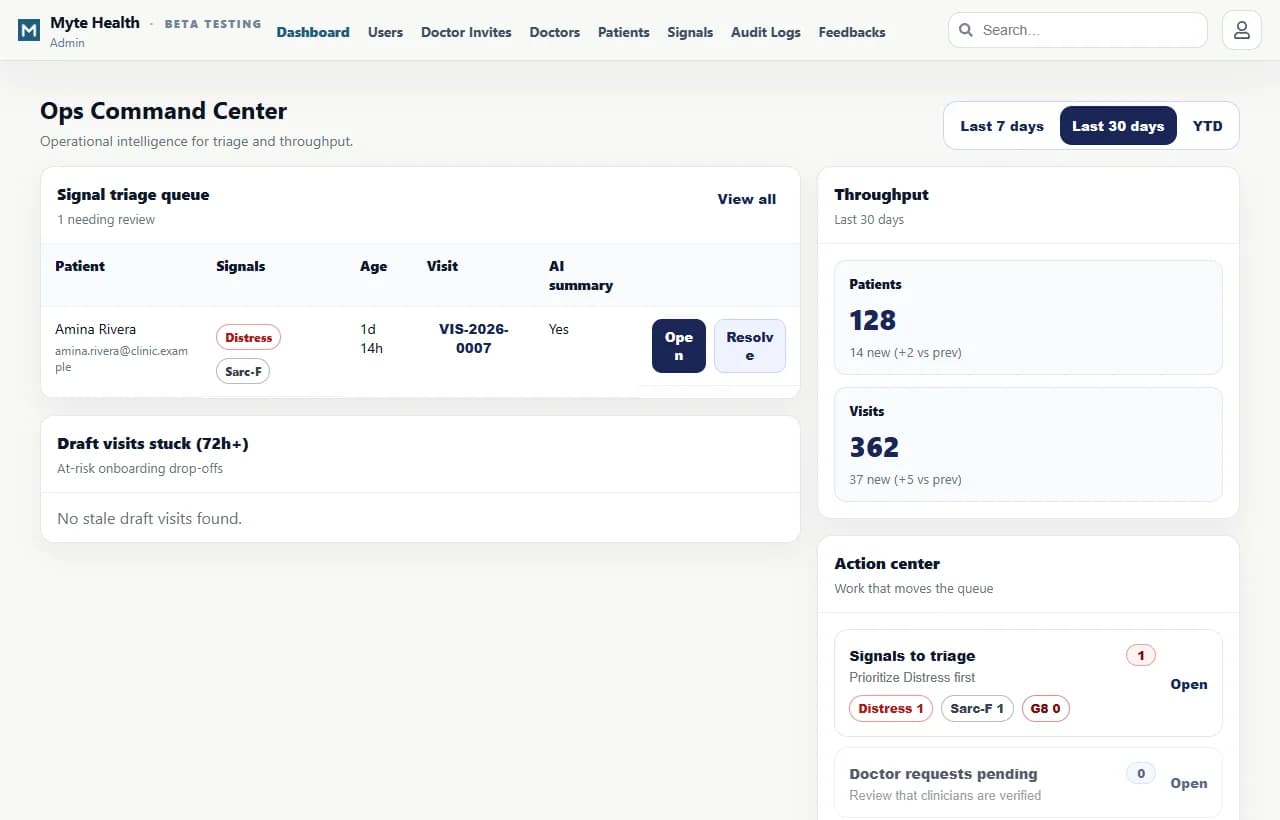
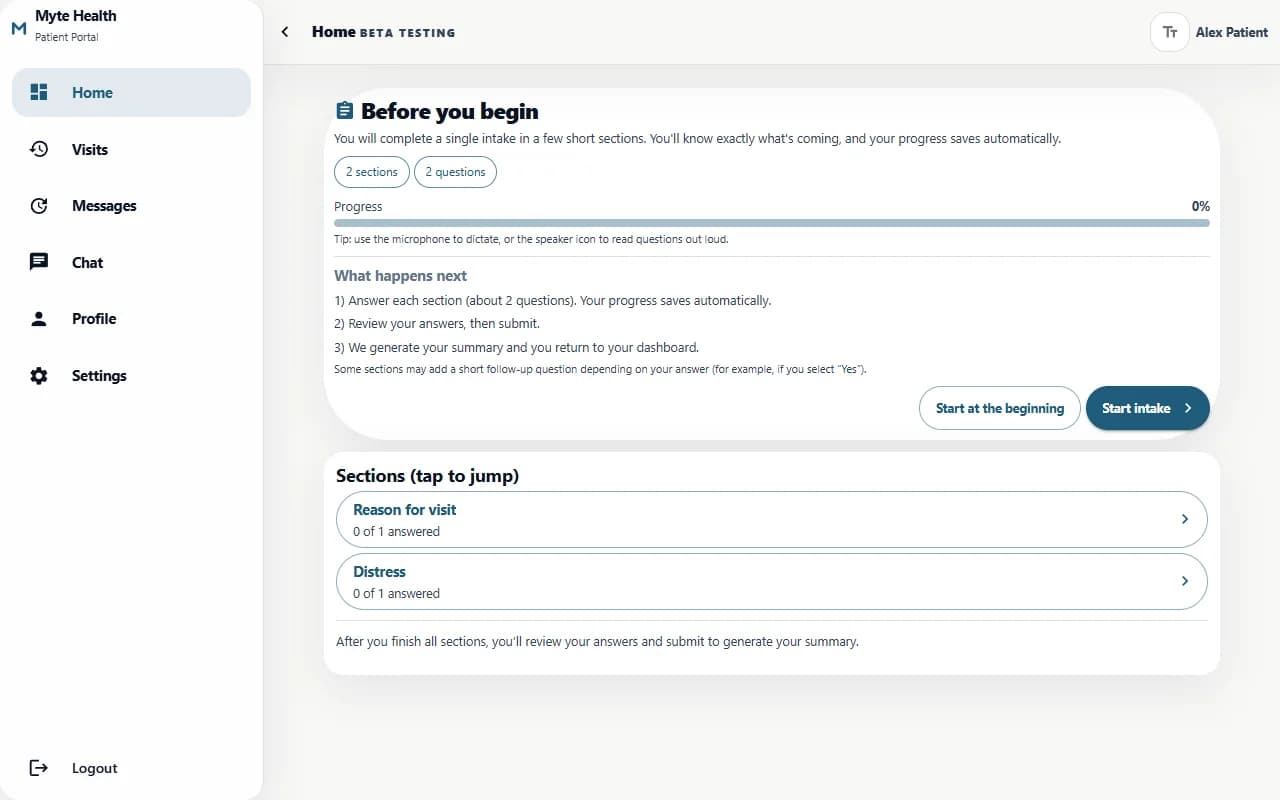
Approved screenshots and workflow examples that show how the operating model works in practice.
Questions operators ask
What should healthcare intake software include?
Registration, verification, patient dashboard, questionnaire logic, structured answers, clinical review, assignment, consultation drafting, finalization, and audit controls.
Can AI summarize patient intake safely?
It can help when the summary is editable, tied to structured source answers, and reviewed by the clinician before use.
Why include known questionnaires?
Questionnaires such as SARC-F, G8, and distress screening create recognizable clinical signals that should stay structured.
Does this replace the doctor?
No. It prepares the context so the doctor can review faster and focus on judgment.
Can patients use it on mobile?
Yes. The intake should be mobile-first because many patients will complete it from a phone before the visit.
Who owns the workflow?
The clinic or healthcare organization should own the workflow, data model, documentation, and governance decisions.
Related field notes
SARC-F, G8, and Distress Screening Belong Inside the Intake Workflow
Known questionnaires create clinical signals only when answers, categories, scoring context, and review stay connected to the patient workflow.
Read noteAI Profile Summaries in Healthcare Need an Edit Path
AI summaries help clinicians only when the source answers remain visible and the doctor can review, edit, approve, or ignore the draft.
Read noteHealthcare Operating Systems Need Audit Logs From the First Workflow
Audit logs are not a later compliance accessory. They are how healthcare teams understand access, edits, reviews, finalization, and trust.
Read noteBuild your owned operating system with Myte
Start with one workflow your team already understands, then turn it into software your business owns.