Healthcare Operating Systems Need Audit Logs From the First Workflow
Audit logs are not a later compliance accessory. They are how healthcare teams understand access, edits, reviews, finalization, and trust.
The operator moment
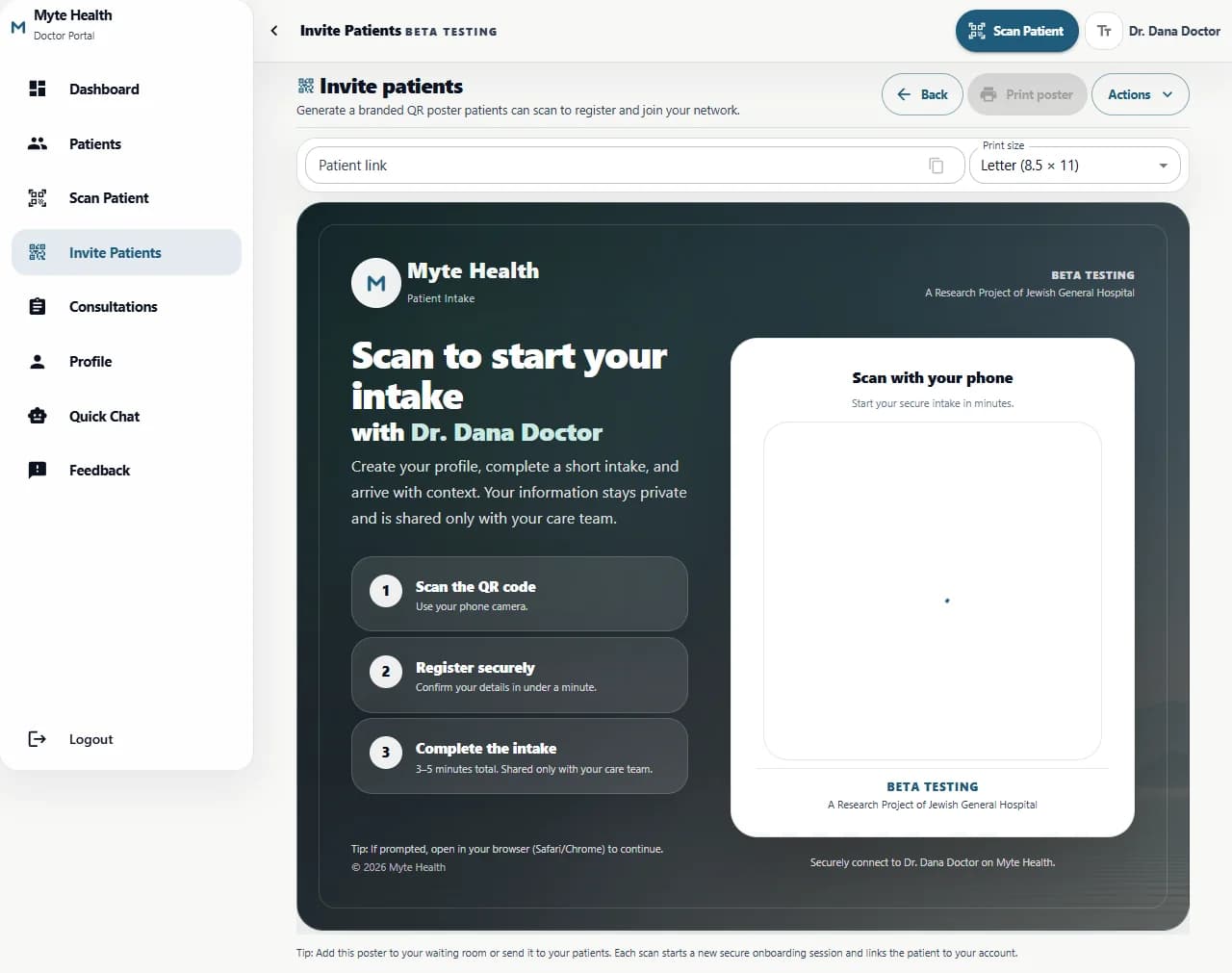
An admin needs to understand a patient record, a doctor edit, an invitation, a finalized consultation, or a feedback event. If the system cannot explain what happened, the team loses confidence exactly when clarity matters.
The hidden cost
The hidden cost of weak auditability is hesitation. Teams avoid useful automation because they cannot see what the system did. Support takes longer, governance becomes manual, and every incident requires detective work.
Generic workflow tools often treat audit as a checkbox. Healthcare operating systems need audit events connected to patient context, role, review state, finalization, search, settings, feedback, and admin actions.
What changes when the system is owned
Workflow map
How to read the proof
Audit logs should capture actor, action, target, timestamp, request context, relevant before-after state, and safe metadata. The goal is useful governance without over-collecting sensitive information in logs.
How Myte delivers it
- 1Define which actions require audit and which sensitive fields should not be logged verbatim.
- 2Build audit capture into patient, doctor, admin, invitation, feedback, and finalization flows.
- 3Create admin review surfaces that explain events in operational language.
- 4Extend retention, export, alerting, and AI event review as governance matures.
Buyer checklist
Why this belongs in your operating system
Myte treats auditability as part of the operating system. We build logs that help real users understand the workflow, support the team, and govern automation safely.
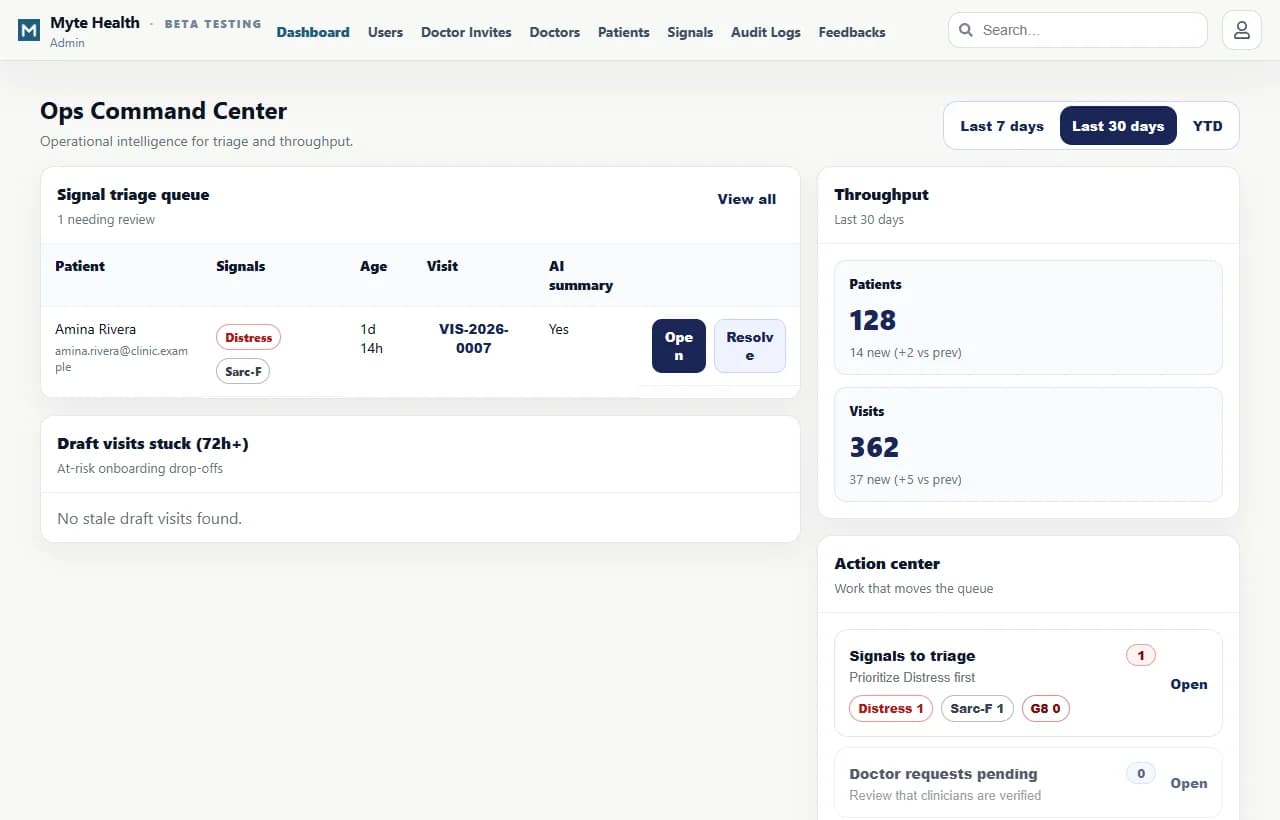
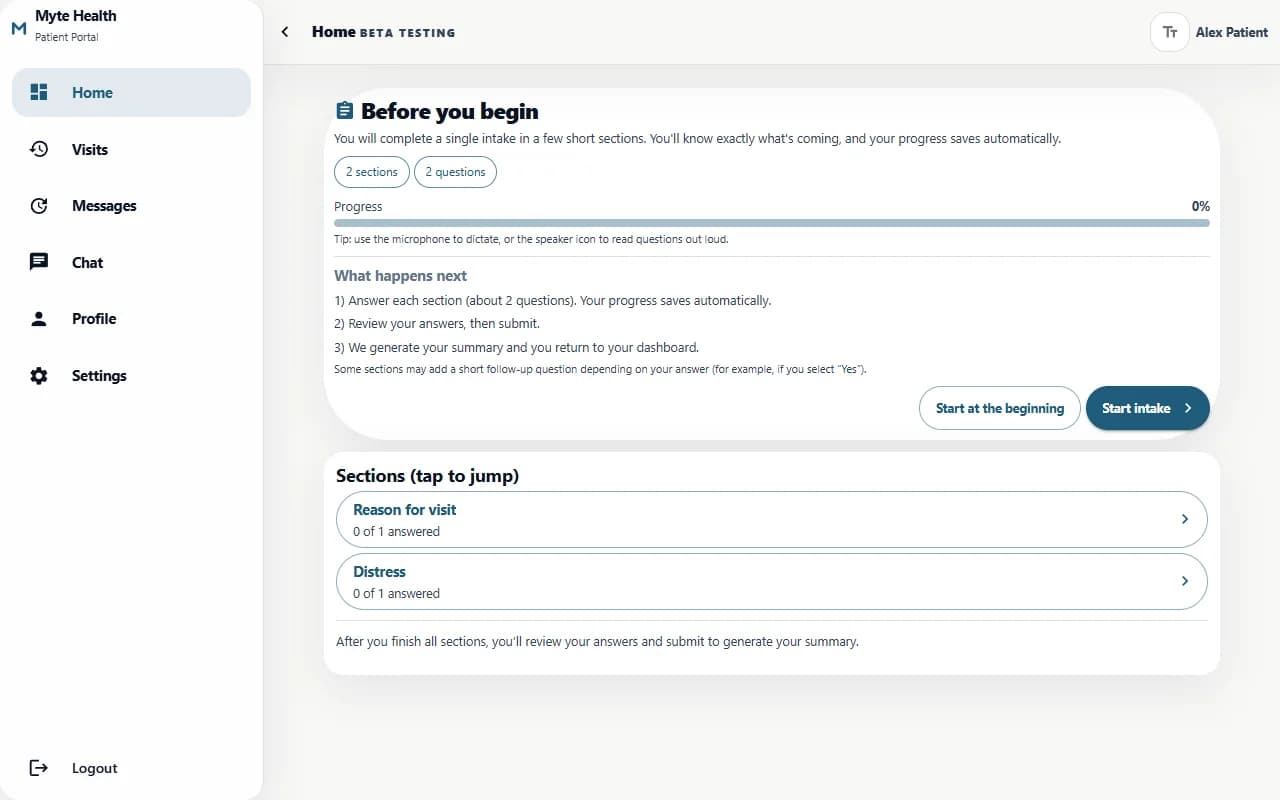
Approved screenshots and workflow examples that show how the operating model works in practice.
Questions operators ask
Why are audit logs important in healthcare software?
They show access, edits, finalization, admin actions, and review history so the organization can trust the workflow.
Should logs store all clinical data?
No. Logs should be useful but careful, with sensitive fields handled intentionally.
Can audit logs help support?
Yes. They explain what happened without forcing teams to guess from screenshots or memory.
Do AI features need audit?
Yes. Generated drafts, edits, approvals, and final use should be traceable.
When should audit be added?
From the first workflow, because later retrofits usually miss important context.
Related field notes
Healthcare Intake Software Should Reduce Noise Before the Consultation
A patient intake system becomes valuable when registration, questionnaires, pain maps, voice answers, doctor review, and consultation drafts form one clinical workflow.
Read noteAI Profile Summaries in Healthcare Need an Edit Path
AI summaries help clinicians only when the source answers remain visible and the doctor can review, edit, approve, or ignore the draft.
Read noteSARC-F, G8, and Distress Screening Belong Inside the Intake Workflow
Known questionnaires create clinical signals only when answers, categories, scoring context, and review stay connected to the patient workflow.
Read noteBuild your owned operating system with Myte
Start with one workflow your team already understands, then turn it into software your business owns.