AI Profile Summaries in Healthcare Need an Edit Path
AI summaries help clinicians only when the source answers remain visible and the doctor can review, edit, approve, or ignore the draft.
The operator moment
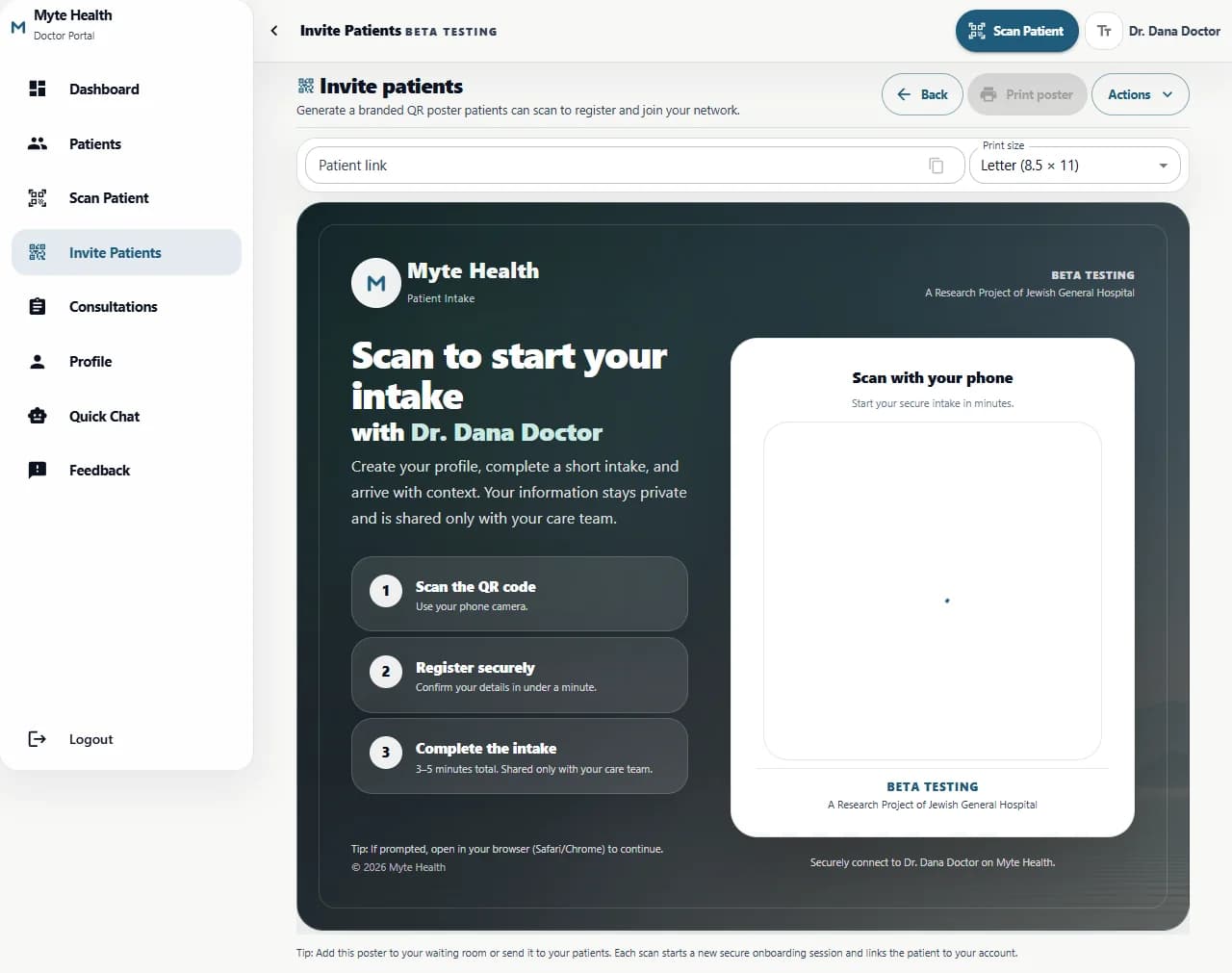
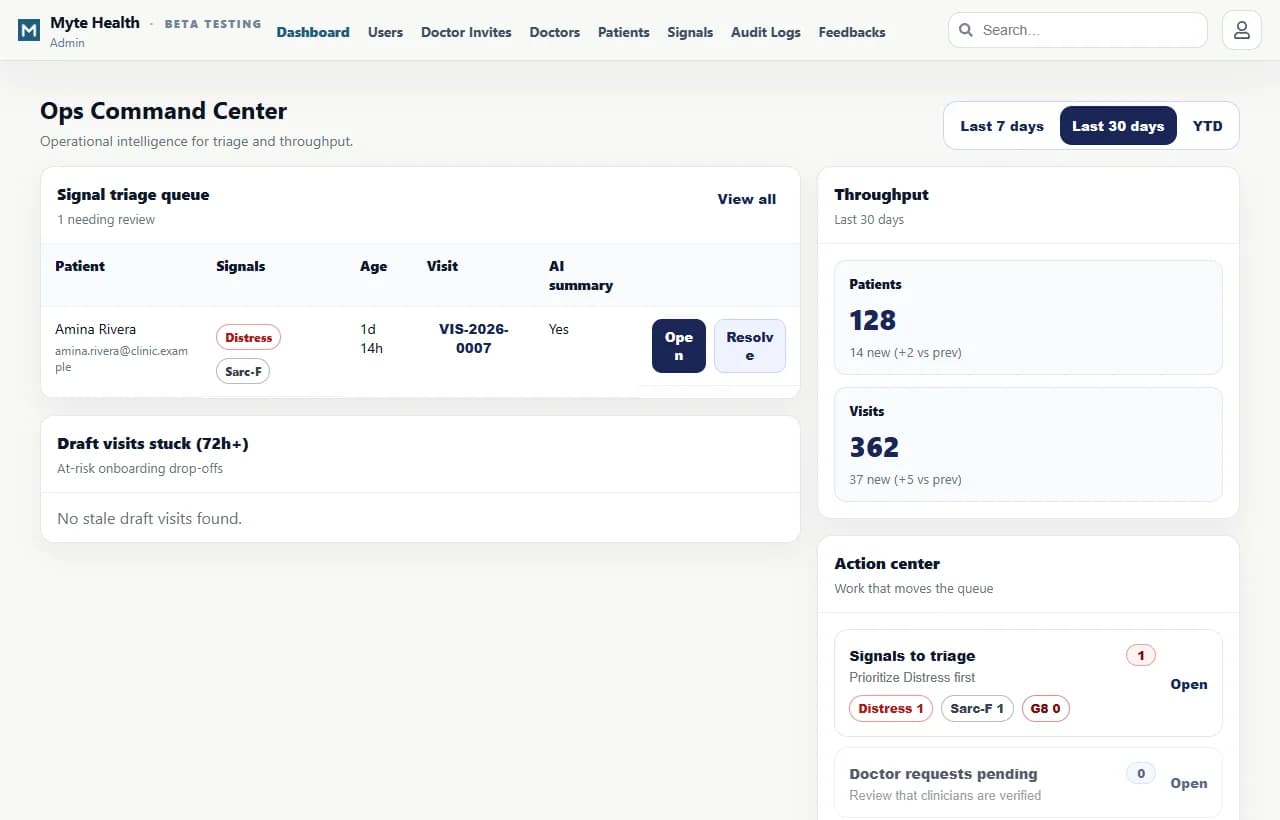
The doctor opens a patient record and needs fast orientation: key answers, symptoms, signals, history, and what still needs review. If the AI summary is a black box, the doctor has to distrust it. If it is tied to source answers, it becomes a review tool.
The hidden cost
The hidden cost of opaque summaries is defensive work. Clinicians re-read everything because they cannot tell what the system used. The promised speed disappears and the organization adds risk instead of reducing friction.
Generic AI can summarize text, but clinical workflow needs source linkage, edit history, assignment, finalization, audit logs, and a patient-visible history where appropriate.
What changes when the system is owned
Workflow map
How to read the proof
AI-generated summaries should store references to source records, generated timestamp, model path where relevant, editor, final state, and audit events. This keeps the automation inspectable and reversible.
How Myte delivers it
- 1Map what clinicians want summarized and what they must always inspect directly.
- 2Connect summaries to structured intake answers and patient context.
- 3Add edit, approve, reject, and finalization states before broad use.
- 4Extend audit logs, feedback, prompt tuning, and reporting around real review behavior.
Buyer checklist
Why this belongs in your operating system
Myte builds AI support around the clinical review path. We keep source context, edits, and finalization visible so AI improves speed without taking over judgment.
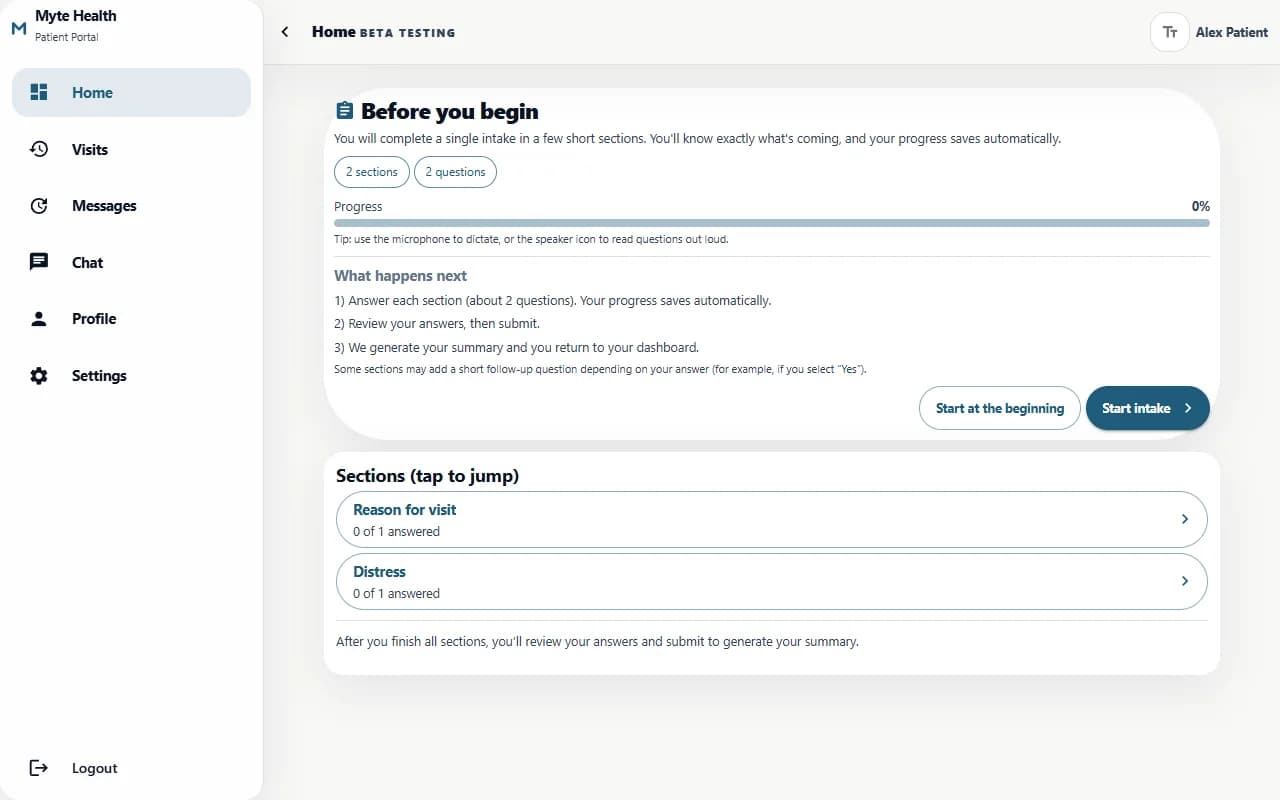
Approved screenshots and workflow examples that show how the operating model works in practice.
Questions operators ask
Can AI summarize patient intake?
Yes, if source answers remain visible and clinicians can edit or reject the summary.
Should the AI summary be final?
No. It should be a draft or review aid until a clinician approves final use.
What should be audited?
Generation, source references, edits, approvals, finalization, and relevant user actions.
Can summaries be tuned?
Yes, but tuning should follow clinician feedback and governance.
Does this replace documentation?
No. It supports documentation by preparing context for review.
Related field notes
Healthcare Intake Software Should Reduce Noise Before the Consultation
A patient intake system becomes valuable when registration, questionnaires, pain maps, voice answers, doctor review, and consultation drafts form one clinical workflow.
Read noteSARC-F, G8, and Distress Screening Belong Inside the Intake Workflow
Known questionnaires create clinical signals only when answers, categories, scoring context, and review stay connected to the patient workflow.
Read noteHealthcare Operating Systems Need Audit Logs From the First Workflow
Audit logs are not a later compliance accessory. They are how healthcare teams understand access, edits, reviews, finalization, and trust.
Read noteBuild your owned operating system with Myte
Start with one workflow your team already understands, then turn it into software your business owns.